Best Wah Pedals 2026: Ranked for Every Style and Budget
Few effects are as instantly recognizable — or as emotionally powerful — as wah. From Jimi Hendrix's searing solos to Slash's "Sweet Child O' Mine" intro, the wah pedal has defined the voice of rock guitar for decades. Getting the right wah matters: a great one responds to your playing and feels musical under your foot. A mediocre one feels clunky and tonal.
We tested five wah pedals across multiple styles and amp setups, evaluating tonal range, build quality, sweep feel, and versatility. Whether you're a classic rock player who wants vintage Crybaby tones or a funk and soul player who needs an auto-wah, there's a pedal on this list for you.
What Is Wah?
A wah pedal is a bandpass filter with a variable center frequency controlled by a rocker pedal. When you rock the pedal back, the filter sweeps down through the frequency spectrum. When you rock it forward, it sweeps up. The resulting "wah" sound mimics the vowel-like formant shifts of the human voice — which is why wah notes sound so expressive and vocal.
Traditional expression wah uses a mechanical rocker pedal you control with your foot. The physical connection to the filter sweep makes traditional wah highly expressive — you can control the speed, range, and accent of the effect in real time. This is what most players think of when they hear "wah pedal."
Auto-wah (envelope filter) uses your playing dynamics to trigger the filter sweep automatically — harder playing opens the filter more, lighter playing closes it. Auto-wah creates that classic funk "chucka-chucka" sound without requiring foot rocking. Artists like Bootsy Collins built careers on envelope filter bass lines. The EHX Q-Tron+ is a standout example.
What to Look for in a Wah Pedal
- Sweep feel: The taper and resistance of the rocker determines how expressive the wah feels under your foot. Smooth, consistent sweep with good resistance is ideal. Wobbly or stiff pedals limit your expression.
- Tonal range: A wider frequency sweep gives more tonal options. Some wahs are voiced for classic sounds; others offer adjustable frequency range for modern versatility.
- Voicing: Classic Crybaby voicing emphasizes upper midrange with a nasal quality. Vox-style voicing is slightly warmer and more open. Modern wahs often offer both or additional voiced modes.
- True bypass vs buffered: True bypass eliminates any coloration when the pedal is off. Buffered bypass in wahs is common and often desirable — it drives longer cable runs without tone loss. Both are valid; choose based on your signal chain.
- Auto-wah sensitivity: For envelope filters, the sensitivity control determines how hard you need to play to trigger the effect. You want fine enough adjustment to dial in your specific playing dynamics.
- Build quality: Wah pedals endure constant physical use. Metal construction throughout — especially the rocker mechanism — is essential for durability.
The Rankings

The 535Q is what happens when Dunlop takes the Crybaby formula and makes it fully adjustable. Six variable frequency settings let you select the center of the wah sweep from bright and cutting to warm and vocal. The Q control adjusts the bandwidth of the filter — narrow Q gives you a tight, focused wah peak; wide Q gives a smoother, more subtle sweep. A boost switch adds up to 18dB for solos.
This level of adjustability makes the 535Q one of the most versatile wahs ever made. You can dial in vintage Hendrix, Clapton-style creamy wah, modern high-gain metal wah, or funk-forward vocal tones all from the same pedal. The build quality is classic Dunlop — heavy cast housing, smooth rocker action. At around $139, it's an investment, but the range of tones justifies the premium for serious players who don't want to own multiple wahs.
Pros
- Six adjustable frequency settings
- Variable Q control
- Built-in boost switch (+18dB)
- Excellent build quality
- Works for virtually any style
Cons
- More expensive than standard Crybaby
- So many options can be overwhelming
- Buffered bypass
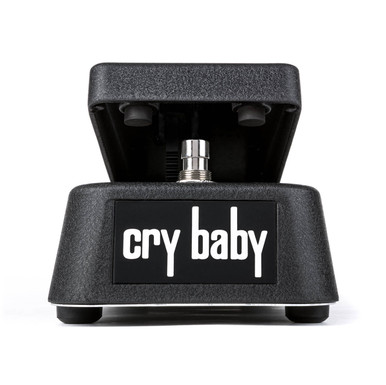
The Original Crybaby is the wah pedal that has appeared on more recordings than any other. The GCB95 uses a classic circuit design with a hot-pointe diode and the original inductor spec that gives the Crybaby its characteristic nasal, vocal quality. It's the sound of Hendrix, Clapton, Page, and countless others — immediately recognizable and deeply musical.
There's nothing complicated here: toe down activates the pedal, rock the rocker for the sweep, toe-click disengages. The heavy cast housing has survived decades of gigging abuse. At around $79, it's the most affordable quality wah pedal available and the logical starting point for any guitarist who doesn't yet know what wah voice they prefer. If you want that classic '60s and '70s sound without adjustment and without overthinking it, the GCB95 delivers exactly that.
Pros
- Legendary Crybaby circuit and voicing
- Indestructible build quality
- Best value wah pedal available
- Smooth, expressive rocker action
- Universally recognized tone
Cons
- No adjustability
- Single fixed voicing only
- No true bypass
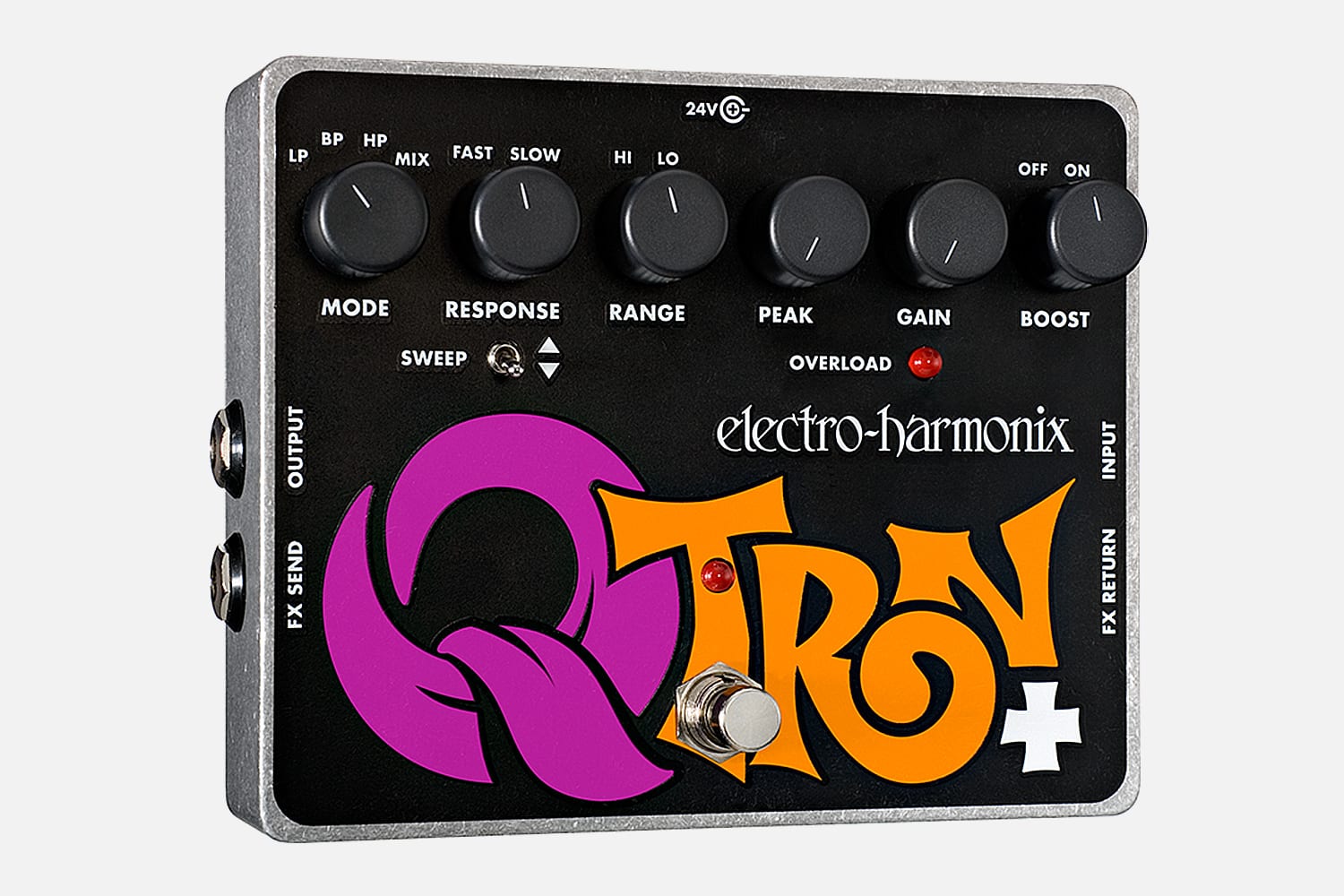
The Q-Tron+ is EHX's updated version of Mike Beigel's legendary Mu-Tron envelope filter — the pedal that gave Bootsy Collins his voice, that defined the sound of Parliament-Funkadelic, and that has appeared on virtually every great funk recording of the last 50 years. The Q-Tron+ adds a built-in effects loop that lets you put other pedals (like a delay or chorus) in the wet signal path only, expanding creative possibilities significantly.
Drive, Q, and Volume controls shape the envelope response: Drive sets how hard you need to hit for the filter to open, Q controls filter bandwidth, Volume sets output level. Three filter modes — low-pass, band-pass, and high-pass — give radically different tonal flavors. The low-pass mode is warm and vocal; band-pass is classic funk; high-pass is bright and cutting. At around $129, it's fairly priced for the range it offers. If you want authentic auto-wah that responds musically to your playing dynamics, this is the pedal.
Pros
- Legendary Mu-Tron lineage
- Three filter modes (LP, BP, HP)
- Built-in effects loop for wet chain
- Highly musical dynamic response
- Authentic vintage envelope character
Cons
- Larger than typical envelope filters
- Requires careful drive adjustment per guitar
- No expression pedal input
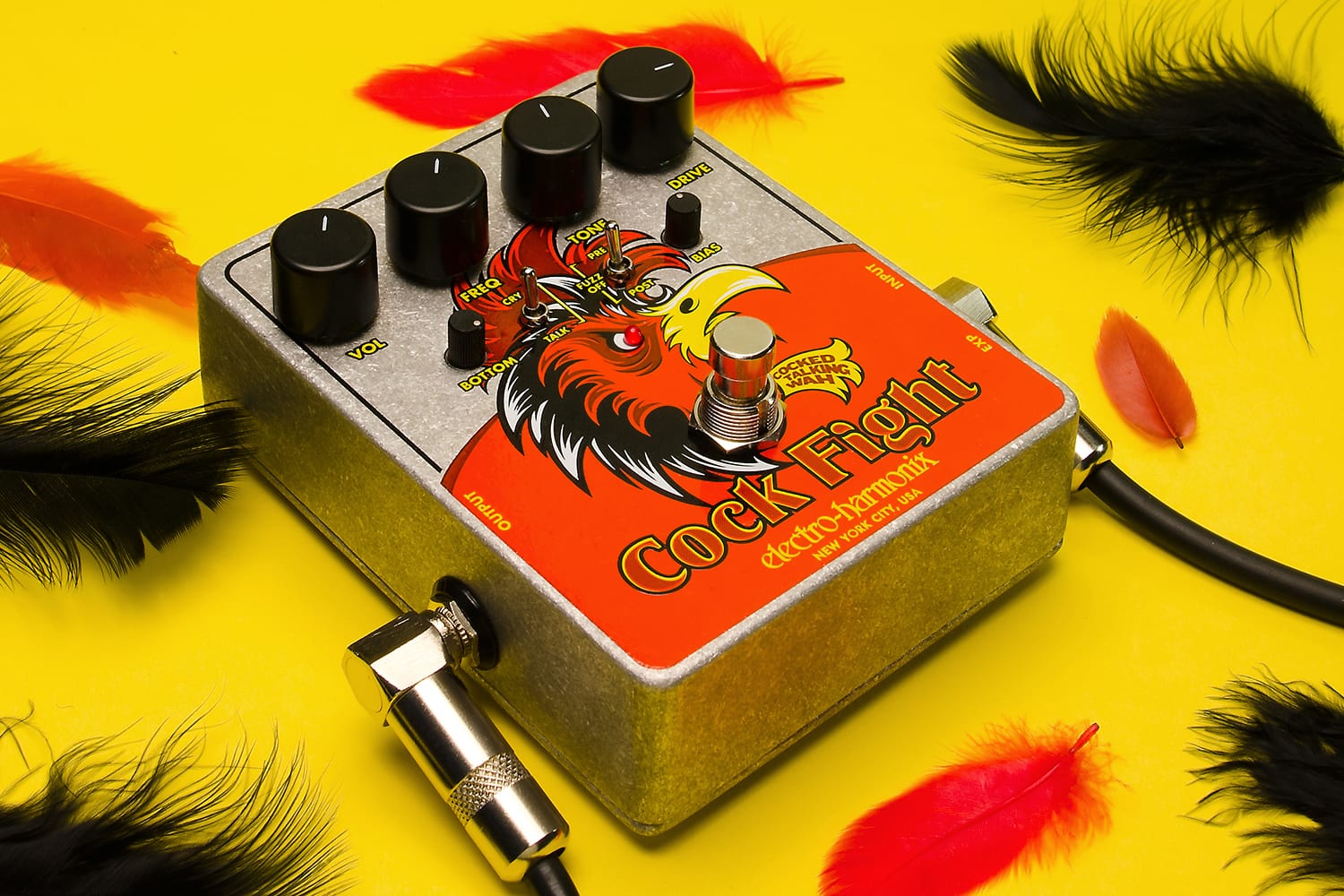
The EHX Cock Fight is a genuinely unique pedal that combines a "cocked wah" fixed filter with an optional fuzz circuit. The cocked wah sound is a wah pedal frozen in a fixed mid-sweep position — instead of sweeping, the filter shapes your tone with a persistent vowel quality. Different positions create different vowels: "wah," "ow," "aw," each with its own tonal character that cuts through a mix in a completely different way.
A three-position switch selects between clean filter, filter with vintage fuzz, and filter with modern fuzz. The fuzz voicings are genuinely excellent on their own, and combined with the vowel filter they create textures that are difficult to achieve any other way. The expression pedal input lets you sweep the filter frequency for more traditional wah sounds, making this a surprisingly versatile pedal hiding under an outrageous name. At around $109, it's a specialty pedal but a great one for players who want something genuinely different.
Pros
- Unique cocked-wah vowel filter
- Three fuzz modes plus clean
- Expression pedal input for sweep control
- Genuinely distinctive tonal character
- Compact footprint for a dual-effect unit
Cons
- Very specialized effect
- Cocked filter is a fixed sound, not expressive
- Not a traditional wah replacement
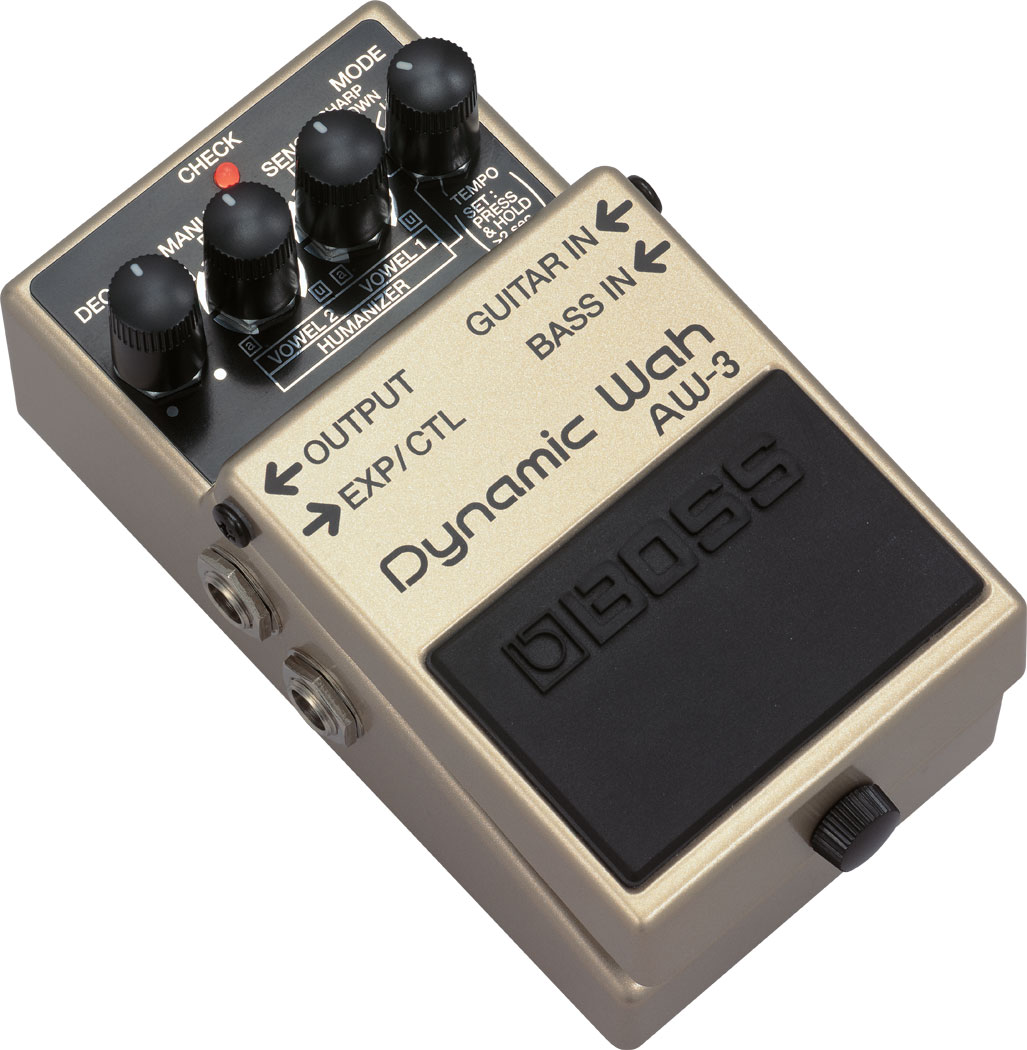
The Boss AW-3 is a feature-packed dynamic wah that covers auto-wah, manual wah, and a unique humanizer mode. In auto mode, it functions as an envelope filter — your pick attack controls the filter sweep. In humanizer mode, it cycles between two vowel sounds ("ah-wah" or "uh-eh") in sync with your playing for a remarkably voice-like effect. The manual mode allows expression pedal control for traditional wah expression without a standalone wah unit.
A guitar/bass switch optimizes the frequency range for either instrument, making the AW-3 genuinely useful for bassists who want that classic auto-wah funk sound without a separate dedicated pedal. Sensitivity, rate, and mode controls give precise adjustment. Boss build quality is ironclad. At around $99, the AW-3 is excellent value for a pedal that covers this much tonal ground. If you want hands-free envelope wah with bonus creative modes, this is the most practical option.
Pros
- Auto-wah, manual, and humanizer modes
- Guitar and bass optimized settings
- Expression pedal input
- Boss build quality and reliability
- Excellent value at ~$99
Cons
- Humanizer mode is a novelty for some
- Not a rocker-style wah
- Buffered bypass
Which Wah Pedal Should You Buy?
The Dunlop GCB95 Original Crybaby is the entry point — affordable, classic, and all you need if you want that iconic sound. Players who want versatility should upgrade to the Dunlop 535Q Multi-Wah, which is the most tone-shaping control in a rocker-style wah format. For auto-wah and envelope filter work, the EHX Q-Tron+ is unrivaled in character and the Boss AW-3 is more practical and feature-rich. The EHX Cock Fight rounds out the list for players who want to explore wah as a textural tool rather than just a sweep effect.
Frequently Asked Questions
What's the difference between a wah pedal and an auto-wah?
A standard wah, like the Dunlop GCB95, is rocked back and forth with your foot in real time. An auto-wah, or envelope filter, like the EHX Q-Tron+, reacts automatically to your picking dynamics without you moving anything, which is the classic funk sound.
Is the Dunlop Crybaby still the best classic wah?
For the iconic, definitive wah voicing, yes. The GCB95 is the sound most people picture when they think of wah. If you want more tonal control, the Dunlop 535Q lets you adjust the frequency range and Q, which the standard Crybaby doesn't offer.
Where does wah go in the signal chain?
Wah typically goes early in the chain, before gain pedals like overdrive and distortion. That placement lets the wah's filter shape your raw tone before it gets pushed into breakup, which sounds more dramatic than wah after gain.
How do I know if wah fits my playing style?
Wah is a strong genre signal. It's essential for funk and certain rock styles, and rarely touched in others. Our Tone Finder looks at your genre and influences and tells you honestly whether a wah belongs in your chain.