Best Chorus Pedals 2026: Ranked for Every Style and Budget
Chorus is one of the most universally loved effects in guitar playing. It thickens your tone, adds shimmer and movement, and gives single notes a richness that makes them sound like two guitars playing together. From the iconic chorus tones of the '80s to modern ambient textures, getting the right chorus pedal can transform your sound.
We tested five chorus pedals across multiple setups — clean amp, light overdrive, and full band mix — and ranked them honestly based on sound quality, versatility, and value. If you're building out your signal chain, check out our guide to the best delay pedals — chorus and delay pair beautifully for ambient and clean tones.
What Is Chorus?
Chorus works by taking your dry signal, splitting it, slightly detuning and delaying the copy, then blending the two signals back together. The result sounds like multiple instruments playing the same part slightly out of sync — which is exactly how an ensemble sounds when musicians play together.
Analog chorus uses bucket-brigade delay chips to create the pitch modulation, giving a warm, organic character that digital can struggle to replicate. The classic Boss CE-1 and Roland JC-120 chorus tones come from analog BBD circuits. Many players still prefer this warmth for clean tones and vintage sounds.
Digital chorus can model that analog character while adding more control: multiple chorus voices, vibrato mode, adjustable waveform shape, stereo outputs, and MIDI capability. Modern digital chorus pedals can do things analog cannot, and high-end digital implementations like the Strymon Ola sound stunning.
What to Look for in a Chorus Pedal
- Rate and depth controls: Rate controls how fast the modulation cycles. Depth controls how extreme the pitch shift is. You want broad ranges on both — slow and subtle for shimmer, fast and deep for Leslie-style wobble.
- Tone or EQ filter: Some chorus pedals include a tone or filter control that lets you dial out mud from the chorus signal or brighten it up. This is especially helpful for bass players or when playing with heavy gain.
- Vibrato mode: Vibrato removes the dry signal and only outputs the pitch-modulated wet signal. It's a completely different sound — more seasick, more dramatic. Having vibrato built in doubles your versatility.
- Stereo outputs: Running stereo chorus through two amps or a stereo PA is spectacular. The wide, panning modulation sounds massive. Important for gigging, overkill for home practice.
- Analog vs digital character: Neither is objectively better. Analog is warm and organic. Digital is precise and versatile. Match to your playing style and music.
- Build quality and bypass: Metal chassis is essential for gigging. True bypass keeps your signal clean when the pedal is off. Buffered bypass maintains signal integrity on long cable runs.
The Rankings
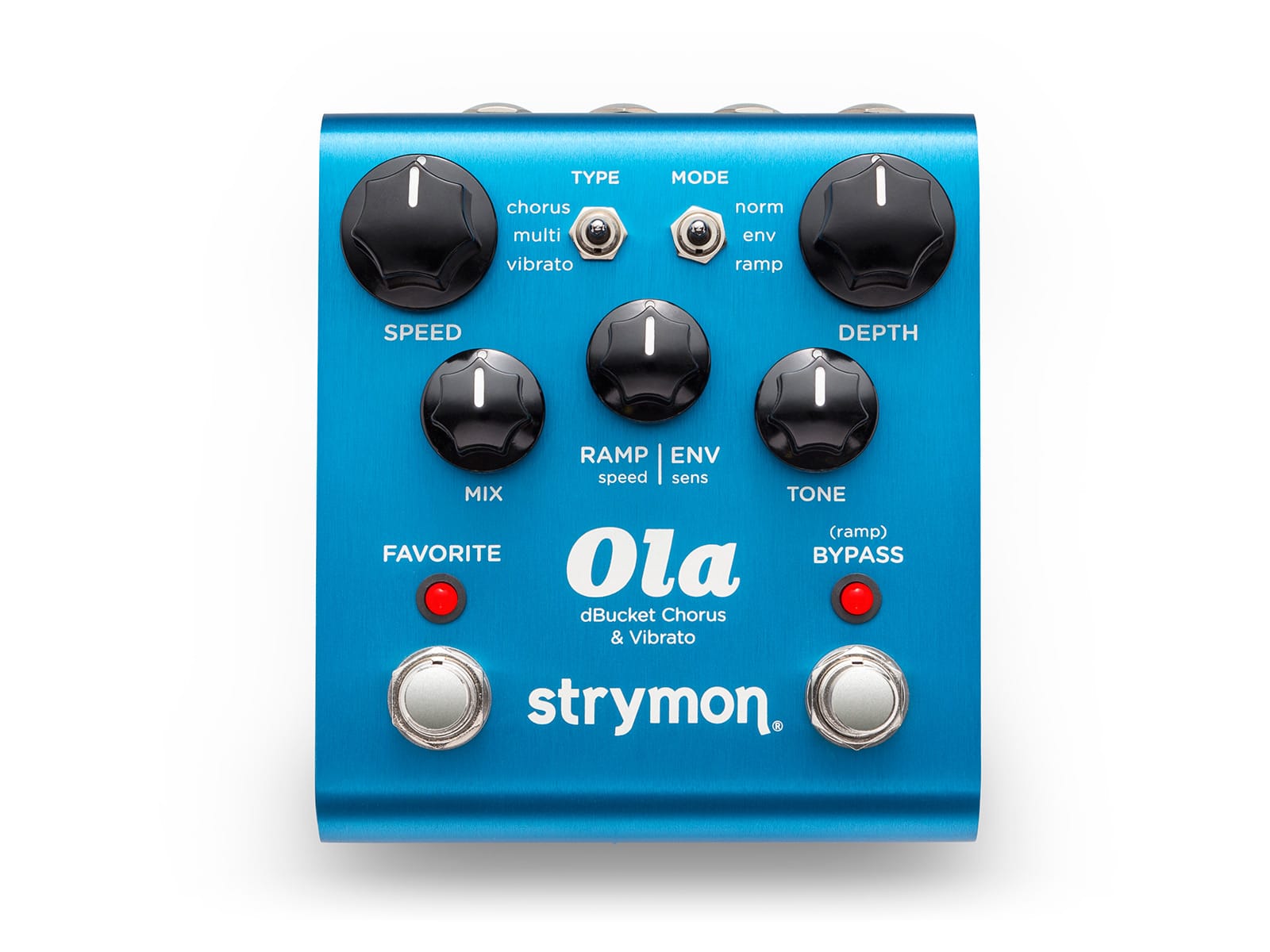
The Strymon Ola is the benchmark for premium bucket-brigade-style chorus. It uses Strymon's dBucket technology to simulate the warmth and character of classic BBD chips while eliminating the noise floor issues that plague vintage analog circuits. The result is stunning: silky smooth modulation, glassy shimmer, and rich, lush depth that sounds musical at every setting.
Six rate modes (slow, medium, fast, rotary, and more) and three chorus voice modes (ensemble, flange-style, and vibrato) give you enormous range. The top-mounted controls make it easy to access in a pedalboard setting. At around $199, it's not cheap, but it's the chorus pedal that audiophile-level players choose when tone is everything. Runs stereo, supports expression pedal input for rate sweeps, and holds up under any gain level without getting muddy.
Pros
- Exceptional analog-character sound quality
- Six rate modes plus vibrato
- Stereo I/O with expression pedal input
- Very low noise floor
- Excellent build quality
Cons
- $199 price point
- Smaller controls can be tricky with heavy boots
- No MIDI

The Boss CE-5 is the definitive workhorse chorus pedal. Based on the legendary CE-1 circuit that defined the '70s and '80s chorus sound, the CE-5 adds high-frequency and low-frequency filter controls that give you remarkable tonal shaping ability. Dial up a classic shimmery clean chorus, a deep warm ensemble sound, or a subtle thickening effect that stays buried in the mix — all from the same pedal.
The stereo output is fully functional and sounds spectacular through two amps. Build quality is quintessential Boss: the metal chassis has survived countless boards and tours. At around $99, it's competitively priced for what it delivers. If you've heard classic chorus tones in rock, pop, or country recordings from the last four decades, you've almost certainly heard a CE-series pedal. The CE-5 keeps that legacy alive in a practical, versatile format.
Pros
- Legendary CE-series circuit lineage
- Hi/Lo filter controls for tone shaping
- Stereo output
- Indestructible Boss build quality
- Excellent value at ~$99
Cons
- No vibrato mode
- Buffered bypass (not true bypass)
- Limited to one chorus voice
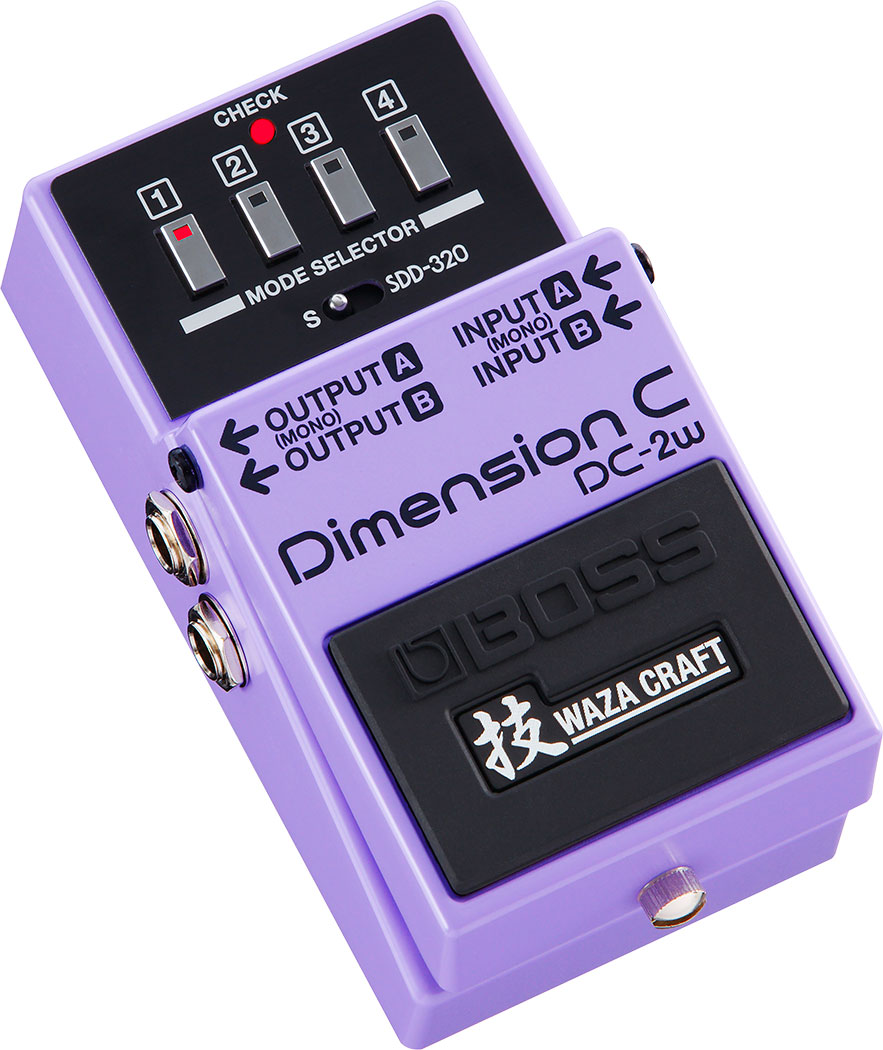
The DC-2W is Boss's recreation of the famous SDD-320 Dimension D rack unit, long coveted by studio engineers for its uncanny ability to add space and width without sounding obviously "chorus-y." Instead of Rate and Depth knobs, you get four preset buttons that trigger carefully tuned chorus settings — just like the original hardware. The result is a sublimely natural widening effect that sits beautifully in a mix.
The Waza Craft designation means this is a premium build with hand-selected components and enhanced analog circuitry. There's a Standard mode for the classic DC-2 sound and a Custom mode that opens up a wider, more modern palette. It's not the most versatile chorus pedal — those four presets are all you get — but for the specific thing it does, nothing does it better. This is the chorus pedal that players buy when they've tried everything else and want something special.
Pros
- Unbeatable "natural" chorus character
- Hand-selected Waza Craft components
- Standard and Custom modes
- Stereo output
- Iconic studio-quality Dimension sound
Cons
- Only four preset tones, no continuous control
- Premium price (~$180)
- Not as versatile as knob-based designs
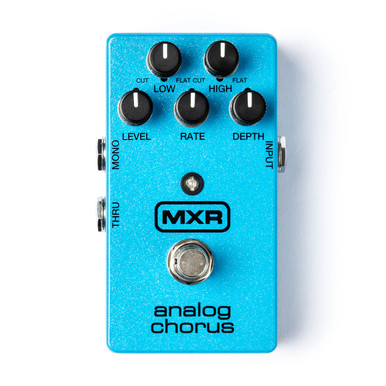
The MXR M234 is a no-frills, all-analog chorus pedal that delivers the genuine bucket-brigade warmth many players prefer over digital simulation. Four controls — Rate, Depth, Level, and a high-cut Filter — give you precise control over the modulation character. The filter knob is particularly useful: roll it back to tame the high-end harshness that sometimes afflicts cheaper chorus pedals, or open it up for a brighter, more present effect.
MXR's construction is bombproof. True bypass keeps your signal path clean. At around $99, it competes directly with the Boss CE-5 but offers a warmer, more vintage-flavored character that many players find more musical. There's no stereo output, no vibrato mode, just excellent analog chorus in a tough metal box. For players who know exactly what they want — warm, rich analog modulation — the M234 delivers without compromise.
Pros
- Genuine analog bucket-brigade circuit
- Warm, musical character
- True bypass
- High-cut filter for tone shaping
- Excellent build quality
Cons
- No stereo output
- No vibrato mode
- Limited to one voice character

The Walrus Audio Julia V2 stands out for one genuinely clever feature: the D-C-V (Dry-Chorus-Vibrato) blend knob. Instead of a simple wet/dry mix, this knob sweeps continuously from pure dry signal through chorus to full vibrato. It makes the Julia extraordinarily expressive — you can dial in just a whisper of chorus shimmer or push into full vibrato territory with a single knob movement.
The V2 update added analog-voiced lag time for richer tone and a more musical feel. Rate and depth controls are straightforward, the build quality is excellent, and the artwork is Walrus Audio's signature attractive visual design. The tone is warm without being muddy, present without being shrill. At around $149, it's in premium territory, but the D-C-V control alone justifies the price for players who want expressive, playable chorus. Connect an expression pedal and you can sweep the blend live — which is genuinely musical.
Pros
- Unique D-C-V blend control
- Full vibrato mode built in
- Expression pedal input
- Analog-voiced character
- Beautiful, compact build
Cons
- ~$149 price point
- No stereo output
- Learning curve on the blend knob
Which Chorus Pedal Should You Buy?
For most players, the Boss CE-5 is the smart starting point — it's versatile, affordable, and battle-tested. Players who want premium analog character should look at the MXR M234 or the Strymon Ola. The Ola is the clear winner when sound quality is the priority and budget isn't. The Boss DC-2W occupies a unique niche — it's the best choice for players who want studio-quality dimension and width rather than traditional modulation. And the Walrus Julia V2 is the most playable and expressive option on the list, especially with an expression pedal connected.
Frequently Asked Questions
What's the difference between analog and digital chorus?
Analog chorus, like the MXR M234 or Walrus Julia V2, uses bucket-brigade circuits that add subtle warmth and grain to the modulation. Digital chorus, like the Boss CE-5, is cleaner and more precise, with more headroom for stacking other effects without things getting muddy.
Is the Boss CE-5 still a good chorus pedal in 2026?
Yes. It's stereo, has a built-in tone filter, and covers everything from subtle shimmer to full vibrato-style warble. It's still the most practical all-around chorus for players who don't want to overthink the purchase.
Where should chorus go in my signal chain?
Chorus is a modulation effect, so it typically goes after gain pedals like overdrive and distortion, and before delay and reverb. Placing it before gain makes the modulation sound muddier and less defined.
How do I know if I need a chorus pedal at all?
It depends on your genre and the rest of your chain, not just personal taste. Our Tone Finder asks about your style and gear, then recommends a full pedal chain so you know exactly where modulation fits.