Best Compressor Pedals 2026: Ranked for Guitar
Compression is the most misunderstood effect in a guitarist's toolkit. Players who don't use it think it's just for country chicken-pickin'. Players who do use it often have it set wrong and don't know what it's actually doing. Done right, a compressor makes everything else on your board sound better: overdrive gets more even, clean playing gets more sustain, arpeggios ring out longer, and your overall volume stays consistent without you having to think about it.
We tested five compressor pedals across single-coil and humbucker guitars, into clean and overdriven amps, and ranked them honestly on how they sound, how easy they are to use, and how well they integrate into a real pedalboard signal chain.
What Compression Actually Does
A compressor reduces the dynamic range of your signal — it turns down loud notes and optionally turns up quiet ones. In practice this means:
- More sustain: Notes don't fade out as fast because the compressor is boosting the signal as it decays.
- More even attack: The initial pick attack gets leveled, which can be good (for smooth jazz or clean playing) or bad (if you want every pick to dig in differently).
- Better note separation: Fast runs and arpeggios ring out more clearly because notes don't get buried by louder ones nearby.
- Tone color: Good compressors add a pleasant harmonic character. The classic country "squish" sound is a compressor's attack time at work.
The goal with most guitar compression is to use it transparently — the listener shouldn't hear the compressor, just the improved consistency and sustain of your playing. If you can hear the compression as a "pumping" or "breathing" artifact, back off the ratio or attack settings.
Optical vs FET vs VCA
Optical compressors (like the Keeley) use a light source and photocell to control gain reduction. The result is a smooth, musical, "program-dependent" response that sounds natural on guitar. Optical compression is what most guitarists are after.
FET compressors (like the Origin Effects Cali76, based on the legendary 1176 studio unit) use field-effect transistors for faster, more aggressive gain control. The attack is faster and more clinical than optical, giving you tighter control over transients. Used heavily in country music and for tele-style picking styles.
VCA compressors use voltage-controlled amplifiers for extremely precise and fast gain control. The Boss CP-1X is a multi-band VCA design. They tend to be the most transparent option — you hear very little character from the compressor itself, just the dynamic leveling.
The Rankings
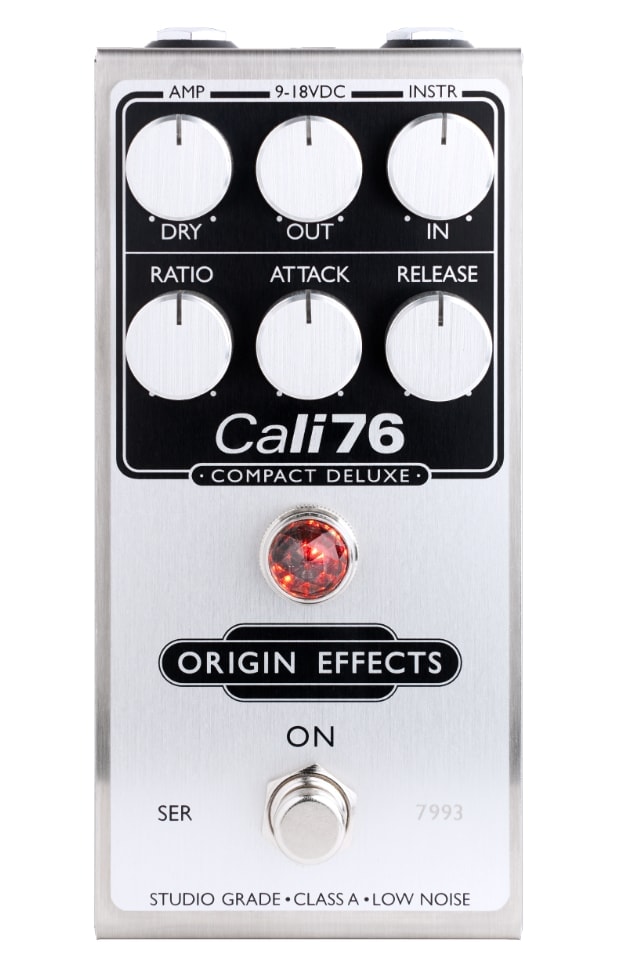
The Cali76 Compact is a direct port of the classic UREI 1176 studio compressor into a pedal format, and it sounds like it. The FET-based circuit gives you the fast, precise gain control the 1176 was famous for, and the four-knob layout — Input, Output, Attack, and Release — gives you real control over how the compressor responds. Running it in "all buttons in" mode (ratio set extremely high) gives you the famous 1176 "British" compression character that you've heard on countless studio records.
At $300+, it's the most expensive compressor on this list. But the sound quality justifies every dollar. In A/B tests against other pedal compressors, the Cali76 Compact is simply more transparent and musical at all settings. Tone stays intact, dynamics feel natural, and even aggressive compression settings don't sound squashed. If you're serious about compression and can afford it, this is the answer.
Pros
- Genuine 1176-circuit FET compression
- Full attack and release control
- Exceptionally transparent even at high ratios
- "All-in" British mode
- Excellent build quality
Cons
- Expensive at $300+
- Requires understanding compression to use well
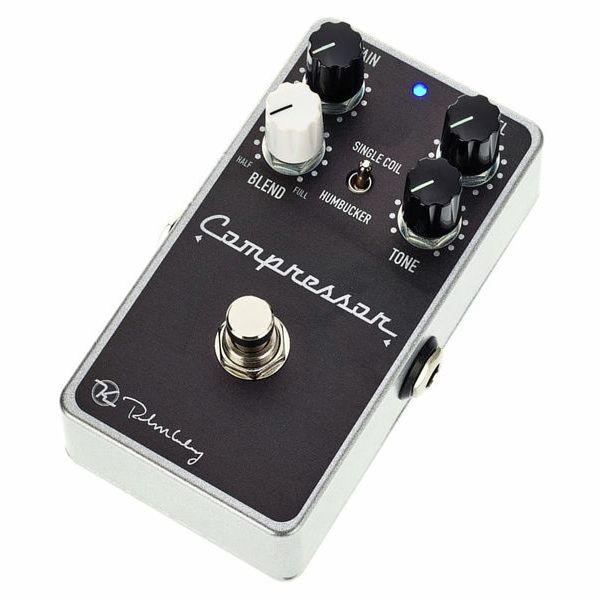
The Keeley Compressor Plus is based on the classic Ross Compressor circuit — the same circuit that powered the original Dynacomp and countless boutique optical compressors before it — with one critical addition: a blend control. The blend knob mixes your dry signal back in with the compressed signal, giving you "parallel compression" without any extra routing. You can compress heavily while keeping the natural attack and feel of your playing in the mix. That single feature makes this pedal dramatically more musical than a Ross clone without it.
At around $130, it's the best value in optical compression. The four controls (sustain, level, tone, blend) are all genuinely useful, and the tone knob lets you brighten or darken the compressed signal to taste. Works beautifully on clean guitar, adds body to light overdrive, and stays out of the way when you don't want it noticed.
Pros
- Blend control for parallel compression
- Warm optical character
- Tone control adds useful EQ
- True bypass
- Excellent value at ~$130
Cons
- Less precise attack/release control than FET types
- Can add some coloration even at light settings
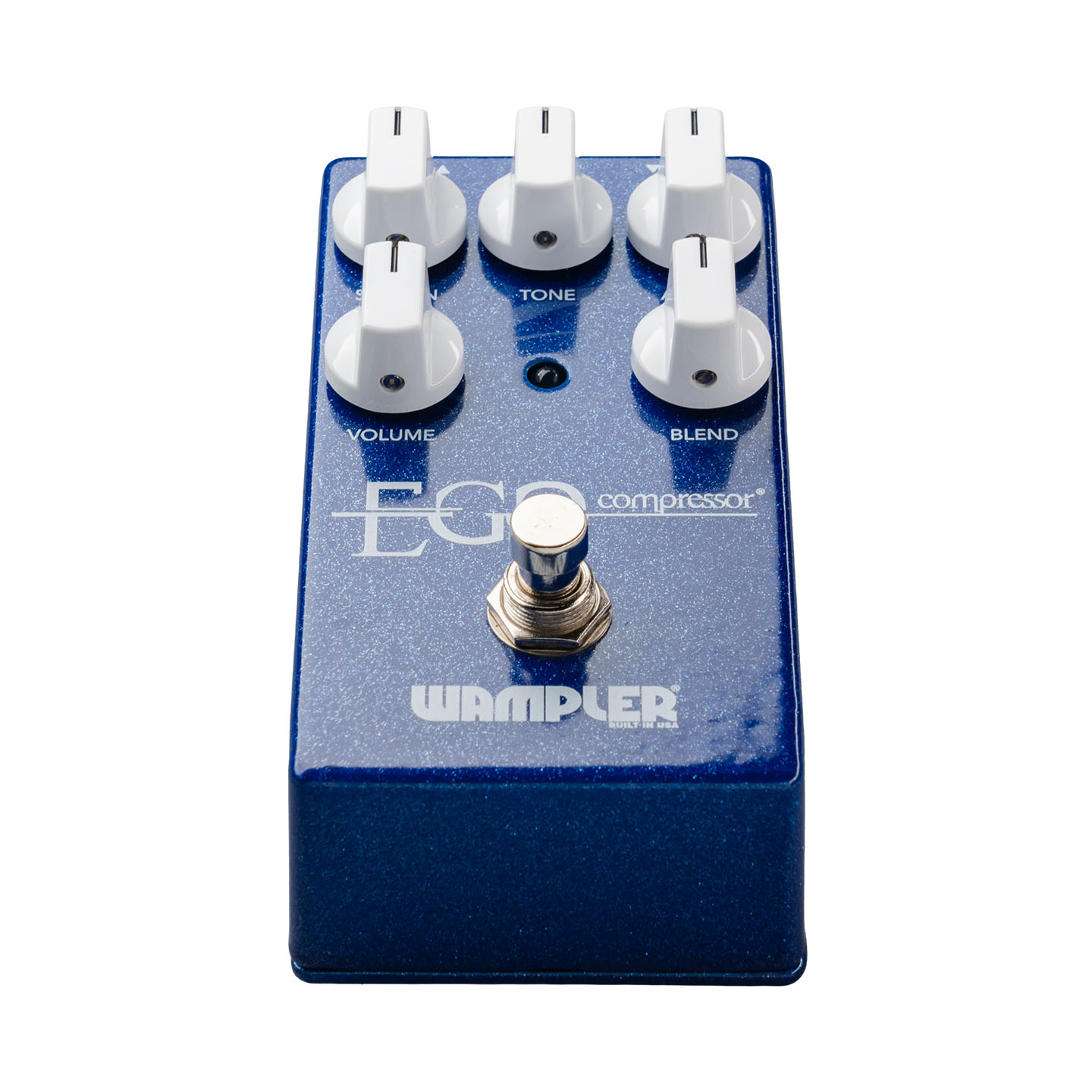
The Ego is Brian Wampler's take on a "fix everything" studio compressor in pedal format, and it nearly succeeds. Five knobs — Volume, Sustain, Attack, Blend, and Tone — give you more control than almost any other compressor pedal, and a bright switch adds an optional high-frequency boost that's useful for cutting through a dense mix. The attack control is the real differentiator: being able to dial in how fast the compressor responds lets you either keep your pick attack natural or smooth it out entirely, depending on the application.
Sound quality is excellent — warm, musical, and transparent at moderate settings. It can go from barely-there clean boost territory to aggressive country squish and everywhere in between. The blend knob is the same game-changer here as on the Keeley. At around $150 it sits between the Keeley and the Cali76 in both price and feature set.
Pros
- Attack control gives precise transient response
- Blend knob for parallel compression
- Tone + bright switch for EQ flexibility
- Excellent dynamic range
- True bypass
Cons
- More controls = more to set up correctly
- Slightly more expensive than Keeley at ~$150
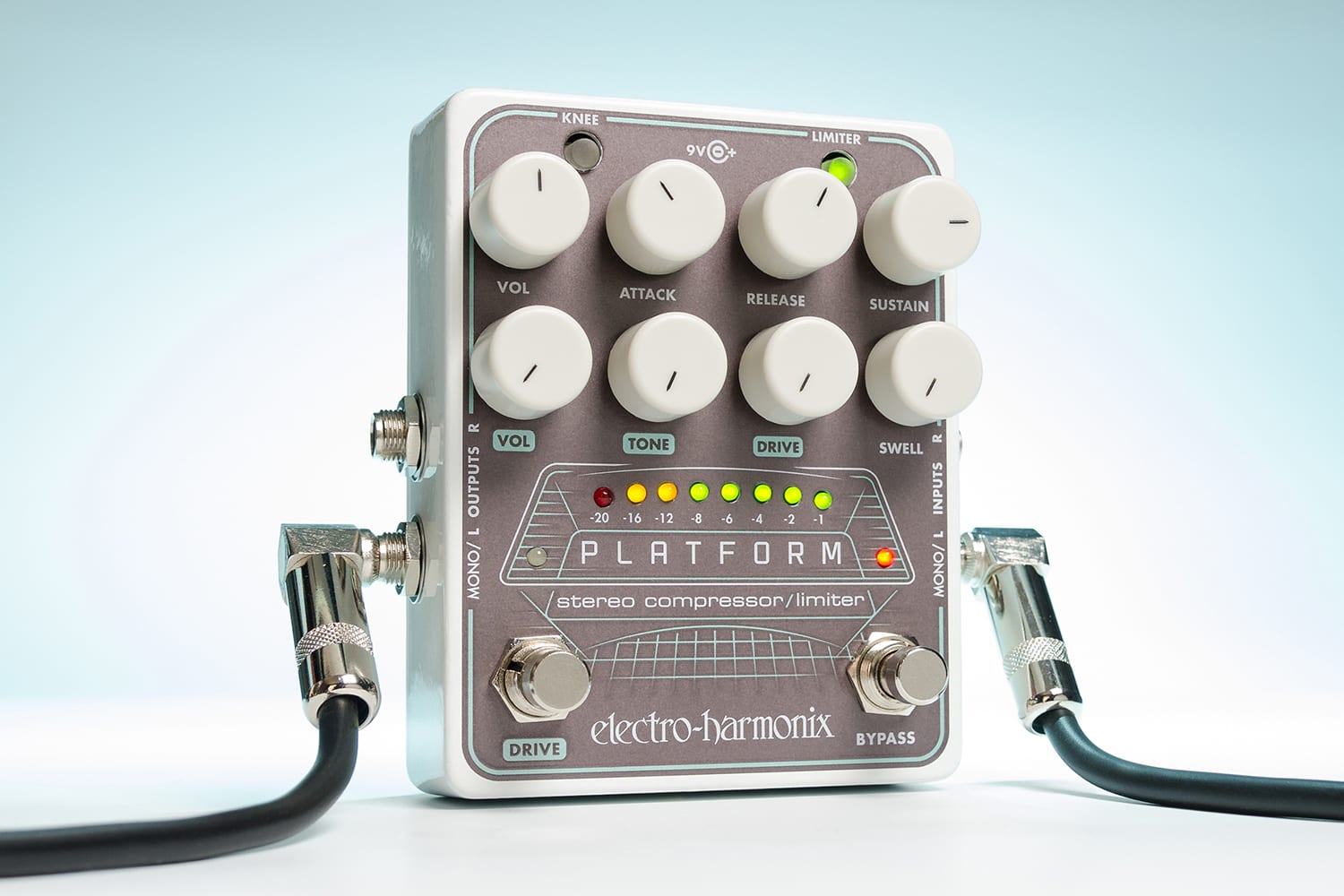
The Platform is an unusual pedal: it's a studio-style compressor and a three-band EQ in one box, with the compressor and EQ running in parallel. The compressor section is transparent and musical, and the EQ section — Bass, Mid, Treble — gives you real tonal shaping that most compressor pedals lack. In practice, having compression and EQ in one box is genuinely useful: you can compress to tighten dynamics and then EQ to restore or enhance the tone, all before you hit your overdrive pedal.
At around $140, the Platform is priced similarly to the Keeley and Wampler but occupies a different niche — it's more of a "signal shaper" than a pure compressor. For players who want to tighten up their tone and have more control over their EQ before it hits the gain stage, the Platform is the smart buy.
Pros
- Compressor and 3-band EQ in one pedal
- Transparent, musical compression
- Genuine EQ control, not just a tone knob
- Saves board space
- True bypass
Cons
- More complex interface than dedicated compressors
- EQ and compressor cannot be used independently
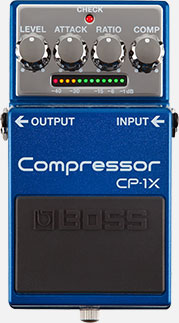
The CP-1X uses a multi-band VCA design that processes low, mid, and high frequencies independently rather than compressing the full spectrum together. This makes it one of the most forgiving compressors to use: the multi-band processing prevents the common issue where a hard-picked low note triggers the compressor hard enough to dull your high strings. The result is a smooth, transparent compression that sounds natural even at aggressive settings.
Four knobs control the standard parameters, and that's it — no blend knob, no attack control, no mode switching. What you lose in flexibility you gain in ease of use. Dial it in once and leave it. At around $135 it's Boss-reliable, transparent, and the easiest compressor on this list to set up correctly the first time.
Pros
- Multi-band processing prevents pumping artifacts
- Extremely transparent — hard to set badly
- Simple four-knob layout
- Boss build quality and reliability
- Preserves pick attack naturally
Cons
- No blend or attack control
- Less character than optical or FET designs
- Buffered bypass
Which Compressor Should You Buy?
For most guitarists, the Keeley Compressor Plus is the right answer. It sounds excellent, the blend knob makes it musical in any context, and the price is fair. If you want more precise attack control, the Wampler Ego adds that without losing musicality. For something simpler that's hard to set wrong, the Boss CP-1X is the easiest path to good compression. The EHX Platform is the smart choice if you want compression and EQ in one slot. And if you want the best regardless of price and you're willing to learn the controls, the Origin Effects Cali76 Compact is a studio-grade tool in pedal format.
Frequently Asked Questions
Do I actually need a compressor pedal?
Not everyone does. Compression helps most if you play with a light touch, want more sustain, or play country, funk, or clean styles where even note-to-note volume matters. Heavy rhythm players running high-gain amps often get similar evening-out from the amp itself.
Where does a compressor go in the signal chain?
Almost always first, right after your tuner and before overdrive or distortion. Compressing before gain gives you a more even, controlled signal feeding into your drive pedals.
What's the difference between optical and FET compression?
Optical compression, like the Keeley Compressor Plus, is smoother and more musical, reacting gradually to your playing. FET compression, like the Cali76 Compact, reacts faster and adds more punch and character, which is why studio engineers reach for FET compressors on percussive sources.
How do I know if compression is the gap in my pedalboard?
Compression is one of the most commonly skipped roles on a pedalboard, and most players don't notice until they hear a recording of themselves. Run your current setup through our Pedal Blindspot tool to see if compression, or anything else, is missing from your chain.