Best Delay Pedals 2026: Ranked for Every Style and Budget
Delay is one of the most versatile effects in a guitarist's arsenal. At its simplest it's a slap-back echo for a little ambience. At its most complex, it's a multi-engine time machine capable of layered patterns, pitch-shifted repeats, and rhythmic textures no other effect can produce. The challenge is picking the right one for how you actually play.
We tested five delay pedals extensively — from simple single-engine boxes to deep multi-mode platforms — and ranked them honestly. If you're also looking for ambient reverb sounds, see our guide to the best reverb pedals — delay and reverb pair naturally together on most boards.
Digital vs Analog Delay
This is the first question most players ask, and the answer is less dramatic than the marketing makes it sound.
Digital delay gives you precise, repeatable, crystal-clear repeats at any delay time. The dry signal passes through unchanged, the echo decays exactly as programmed, and modern algorithms can do things analog simply cannot: pitch-shifting repeats, reverse echo, multi-tap patterns, extremely long delay times. If you want to tap-tempo sync your delay to a song's tempo or dial in a specific dotted-eighth note delay time for post-rock stuff, you need digital.
Analog delay (bucket-brigade) passes the echo signal through a chain of capacitors that inherently degrade the signal in a warm, musical way. The repeats get darker and softer as they decay. The sound feels "organic" and sits in a mix without fighting the dry tone. Analog delay doesn't do tap tempo well, tops out at shorter delay times (usually under 600ms), and can't do complex modulation modes. But for blues, classic rock, country, and vintage-inspired sounds, it's hard to beat.
For most players: get a digital delay. You can usually dial in warm-sounding repeats with the right settings, you get tap tempo for live use, and the longer delay times open up more musical options. Only go analog if you specifically want that bucket-brigade character and don't need tap tempo or long delay times.
What to Look for in a Delay Pedal
- Tap tempo: Essential for live playing. Set your delay time on the fly to lock in with a drummer or backing track. Non-negotiable if you gig.
- Delay time range: Short (under 300ms) for slap-back and doubling. Long (500ms+) for ambient and post-rock textures. More range is almost always better.
- Modulation: A modulation control adds subtle chorus/vibrato to the repeats, which is the secret behind a lot of classic delay tones. Good to have.
- Number of modes: Single-mode pedals are simpler to use live. Multi-mode pedals give more options for different songs or recording sessions.
- Trails vs hard bypass: "Trails" mode lets echoes ring out when you turn the pedal off. Hard bypass cuts them immediately. Trails sounds more natural but may not work in all setups.
- Stereo I/O: Useful for recording or running a stereo rig. Overkill for mono practice.
The Rankings
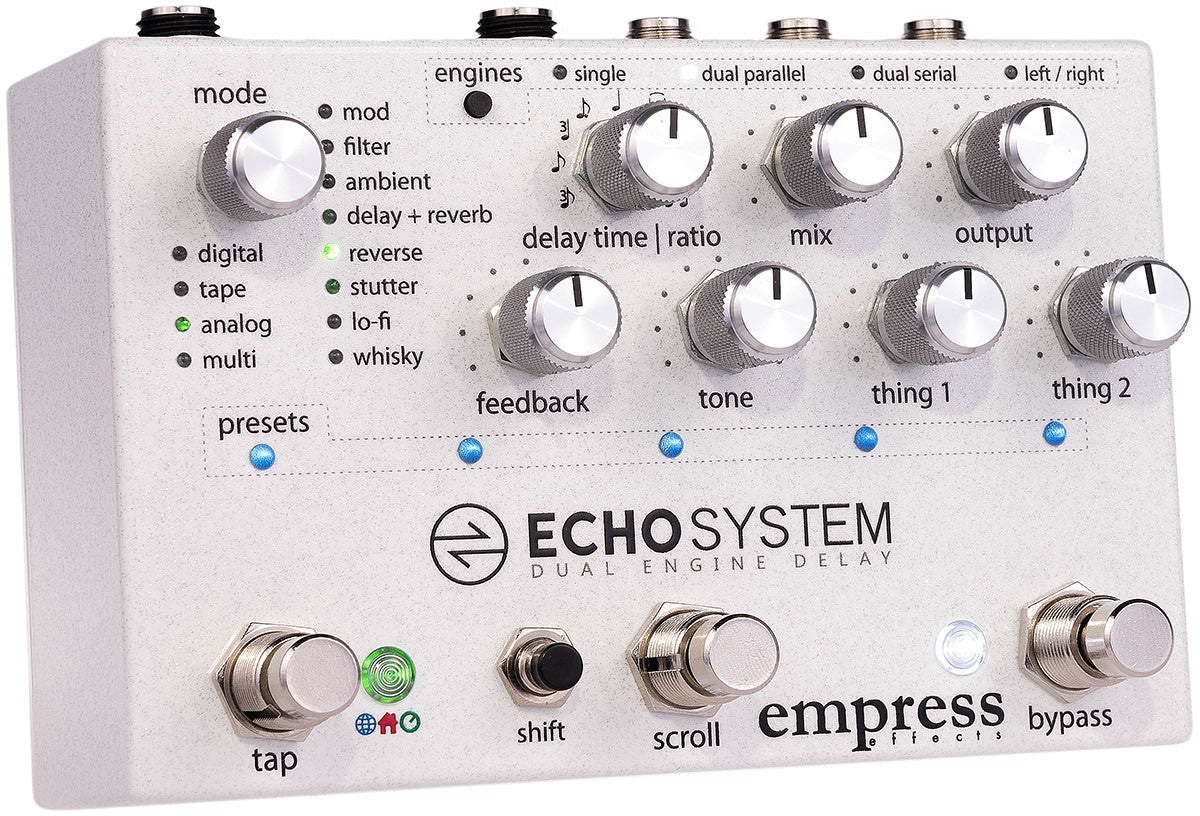
The Echosystem is the most capable delay pedal you can buy for live and studio use. Two independent delay engines run simultaneously, and you can route them in series or parallel — which means you can run a short slapback in parallel with a long ambient repeat, or a tape delay feeding into a shimmer reverb-style delay, all in one box. Thirty-six delay algorithms cover everything from clean digital to tape flutter, analog warmth, pitch-shifting echoes, and reverse delay.
The MIDI implementation is comprehensive, the stereo routing options are flexible, and the sound quality is excellent throughout. Tap tempo with a dedicated footswitch makes it practical live. At $349 it's the most expensive pedal on this list, but it's also the only delay you'll ever need to buy.
Pros
- Two independent delay engines
- 36 delay algorithms
- Excellent stereo routing flexibility
- Full MIDI implementation
- Top-tier sound quality
Cons
- Expensive at $349
- Steep learning curve to use all features
- Larger footprint than simple delays
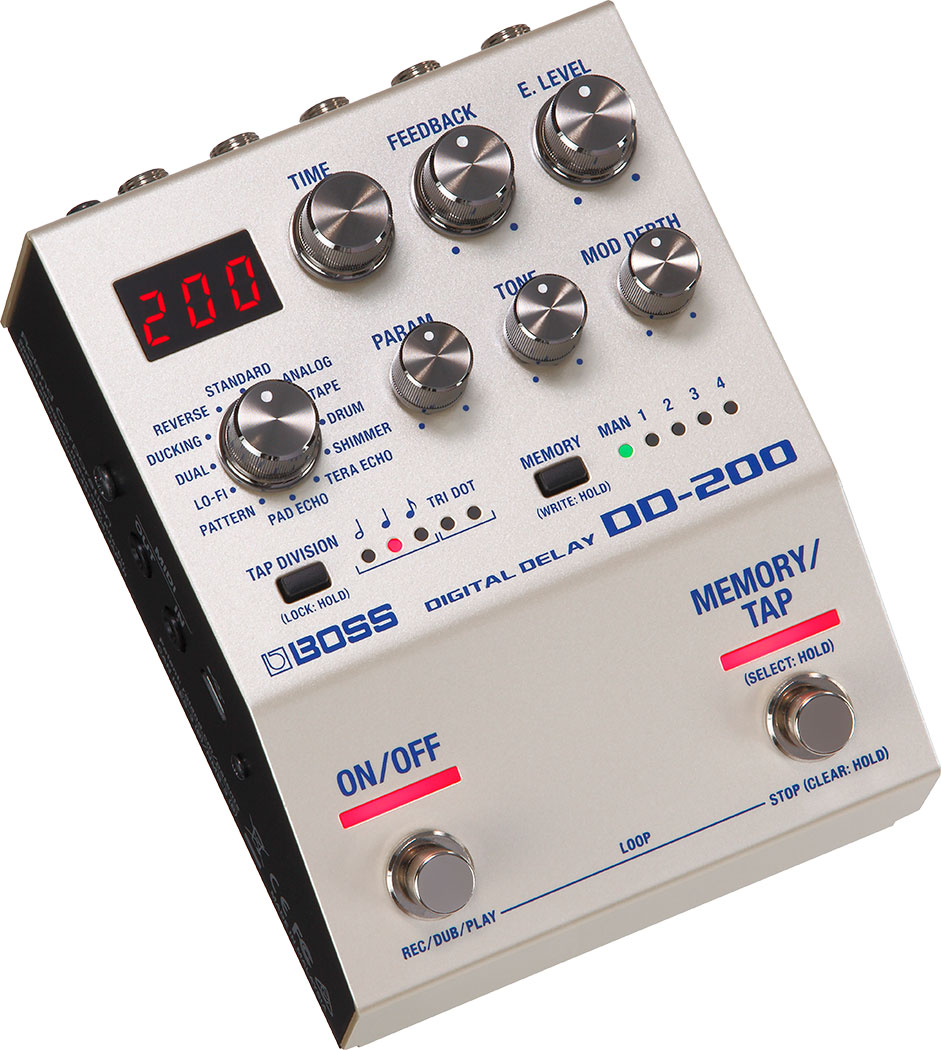
The DD-200 is Boss's best delay pedal in the standard compact format, and it covers more ground than anything else in its size. Twelve delay modes include digital, analog-modeled, tape, shimmer, reverse, warp, and more, with 12 seconds of delay time and full stereo I/O. The sound quality is excellent — the digital modes are clean and precise, and the tape and analog models are surprisingly convincing.
Two footswitches handle bypass and tap tempo, plus a hold function for on-the-fly looping. Up to 12 presets are accessible via MIDI. The enclosure is standard Boss compact size, which means it fits anywhere. This is the delay pedal most gigging guitarists should buy — it does everything well without being overwhelming to use.
Pros
- 12 high-quality delay modes
- Tap tempo + hold function built in
- Stereo I/O
- 12 seconds of delay time
- MIDI controllable
- Boss build quality and reliability
Cons
- 12 modes can be more than some players need
- Buffered bypass (though trails mode sounds natural)
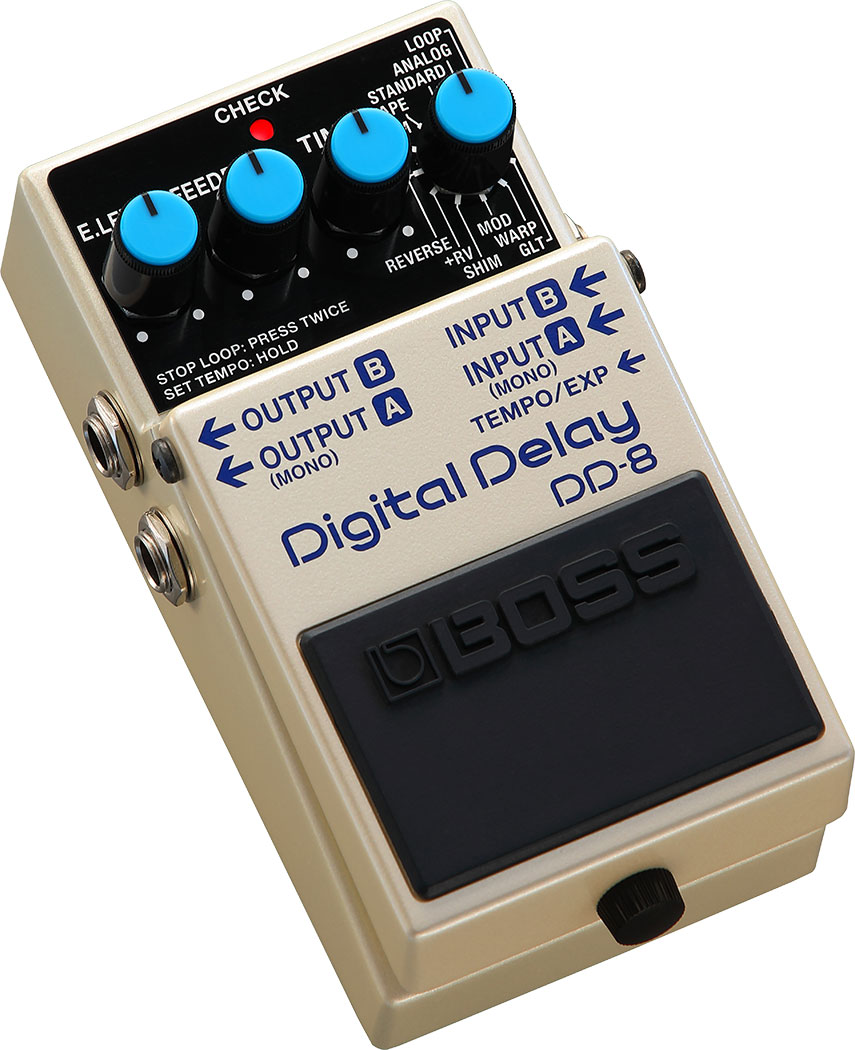
If the DD-200 has more features than you need, the DD-8 is the right call. Eleven delay modes, tap tempo via the single footswitch (hold the switch), up to 10 seconds of delay time, stereo I/O, and a looper function — all in the classic Boss compact format. The DD-8 is a refinement of a formula that's been working since the DD-3 launched in 1986, and it's the most popular delay pedal in the world for a reason.
Sound quality is excellent. The "Analog" and "Tape" modes don't have the warmth of the DD-200's models, but they're convincing enough for most applications. The looper function adds up to 40 seconds of recording time. At around $130 it's one of the best value-for-money delay pedals made.
Pros
- 11 delay modes including analog and tape
- Tap tempo built in
- 40-second looper included
- Industry-proven reliability
- Excellent value at ~$130
Cons
- Tap tempo via hold (less intuitive than dedicated switch)
- Tape and analog models less convincing than DD-200
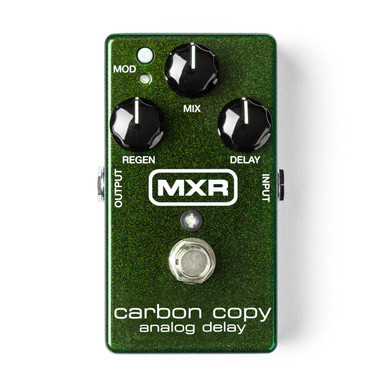
The Carbon Copy is the benchmark for analog delay. The bucket-brigade circuit gives the repeats exactly the warm, organic decay that analog delay fans are after, and the simple three-knob layout (mix, regeneration, delay) is intuitive enough to dial in mid-song on stage. A small modulation switch activates a built-in chorus effect on the repeats that's subtle but beautiful.
Delay time maxes out at 600ms, which is plenty for most applications. There's no tap tempo, which is the main trade-off versus digital. If you're locked into a set tempo on stage, this gets complicated. But for studio use, jam sessions, and any context where you set the delay time by ear, the Carbon Copy's warmth is hard to argue with. The build quality is typical MXR — compact, solid, and built to last.
Pros
- Genuine bucket-brigade analog character
- Simple, fast controls
- Optional modulation switch
- Excellent build quality
- True bypass
Cons
- No tap tempo
- 600ms maximum delay time
- No stereo I/O
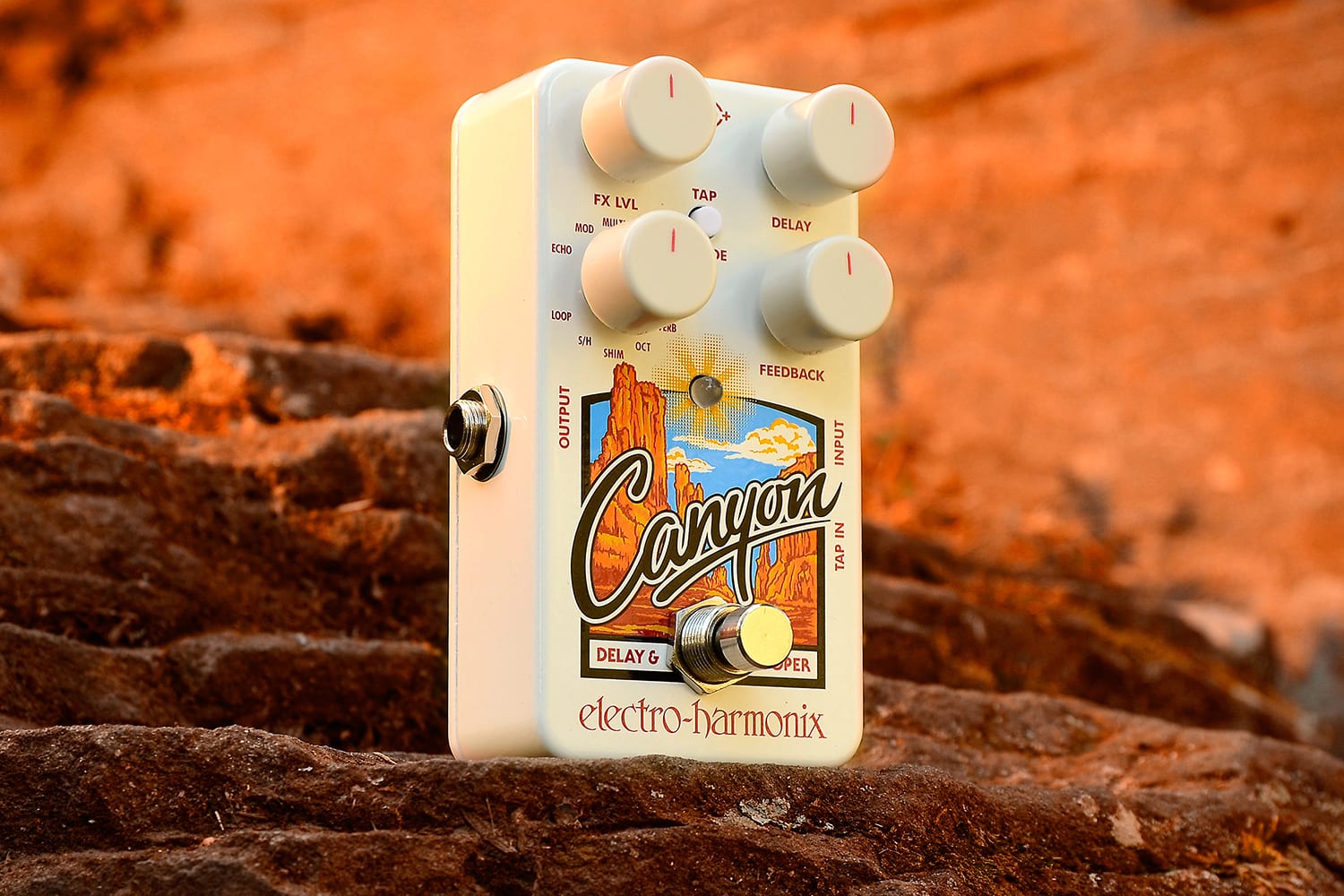
The Canyon packs eleven delay modes and a looper into a mini-format enclosure for around $115, which is remarkable value. The modes cover digital, tape, multi-tap, shimmer, reverse, drum echo, and more. Sound quality punches well above the price — the digital mode is clean and musical, and the modulation mode adds a chorus-on-repeats effect similar to a vintage Roland Space Echo.
Tap tempo works via a dedicated jack (connect an external footswitch) rather than the main bypass switch. The looper gets 62 seconds of recording time, which is more than the DD-8. The mini footprint makes it ideal for boards with limited space. If you're building your first board and want delay covered without spending $130+, the Canyon is the obvious choice. It's also a smart secondary delay pedal for players who want a simple backup or a different character on tap.
Pros
- 11 delay modes at under $120
- 62-second looper built in
- Shimmer, reverse, and multi-tap modes
- Mini format saves board space
- True bypass
Cons
- Tap tempo requires external footswitch
- Controls are cramped in mini format
- No stereo I/O
Which Delay Pedal Should You Buy?
For most gigging guitarists, the Boss DD-200 is the right answer. It covers every practical delay type, has tap tempo, and fits anywhere. If you want something simpler at a lower price, the Boss DD-8 does most of the same things for less. If analog warmth is the priority and you don't need tap tempo, the MXR Carbon Copy is the benchmark. If you want the best regardless of price, the Empress Echosystem is the most capable delay pedal made. And if you're on a budget and want maximum features per dollar, the EHX Canyon is the obvious smart buy.
Frequently Asked Questions
What's the difference between analog and digital delay?
Analog delay, like the MXR Carbon Copy, uses bucket-brigade chips that make repeats get warmer and darker each time they cycle, which sounds more organic. Digital delay, like the Boss DD-200 or DD-8, keeps every repeat clean and identical, and it's better for precise, modern-sounding echoes.
Do I need tap tempo on a delay pedal?
If you play live and change songs or tempos often, yes. Tap tempo lets you dial in delay time on the fly instead of turning a knob and guessing. If you mostly play at home or in the studio where you can set it once, it's less essential.
Should delay go before or after reverb?
Delay usually goes before reverb in the chain. That way each delay repeat gets reverb applied to it, which sounds more natural than reverb feeding into delay, which can smear into a wash of noise.
How much delay time do I actually need?
Every genre uses delay differently, from slapback country twang to ambient wash. If you're not sure what delay time or mode suits your style, our Tone Finder factors in your genre and influences to recommend the right kind.