Best Tuner Pedals 2026: Most Accurate, Most Readable, Best Value
A tuner pedal is the most important pedal on your board and the one players think about least. It's easy to dismiss as a commodity item — but the reality is that the accuracy, speed, and readability of your tuner directly affects how in-tune your performance sounds. A mediocre tuner makes it harder to get precise, especially in dark venues or loud stage environments.
We tested five tuner pedals for accuracy (±cents), display readability, true bypass quality, and reliability. There's a significant range from entry-level to pro-grade strobe accuracy — and this guide will help you figure out exactly where on that range you need to be.
Why Your Tuner Matters More Than You Think
A chromatic tuner with ±3 cent accuracy sounds fine in isolation. But ±3 cents per string across six strings means your guitar could be measurably out of tune in a chord even when every string reads "in tune" on the display. Strobe tuners achieve ±0.1 cent accuracy — 30 times more precise — which makes a real and audible difference in chord intonation, especially in studio settings or with other tuned instruments.
Display readability matters just as much during a gig. A tuner you can't read from five feet away in a dark club is a tuner that's going to cost you tuning precision on stage. Bright, high-contrast LED or OLED displays with wide viewing angles aren't luxuries — they're functional requirements for live performance.
Finally, true bypass vs. buffered bypass in a tuner has real implications. Many players put their tuner first in the signal chain. A buffered tuner in the first position can actually benefit long cable runs, driving signal down a 20-foot cable without the high-end rolloff that true bypass suffers at cable lengths. The Boss TU-3's buffer is actually a feature that many tone-conscious players deliberately use.
What to Look for in a Tuner Pedal
- Accuracy: Standard chromatic tuners offer ±1–3 cent accuracy. Strobe tuners achieve ±0.1 cent. For casual gigging, ±1 cent is fine. For studio work or playing with other tuned instruments, strobe accuracy matters.
- Display readability: Bright LED or OLED display, high contrast, wide viewing angle, and large enough indicator segments to read from standing height at a distance. This is often the most overlooked factor.
- Tuning speed: How quickly does the tuner lock onto a note? Fast locking means less time spent tuning between songs. Strobe displays can appear to respond instantly even when the pitch is still settling.
- True bypass vs buffered: True bypass preserves signal path purity. Buffered bypass can benefit signal strength on long cable runs. Consider your full signal chain when deciding which you prefer.
- Alternative tunings: Flat tuning, drop tuning, capo support, and custom tuning presets are useful for players who frequently change tunings between songs.
- Build quality: Tuner pedals are activated and deactivated constantly. Heavy metal construction and solid switching are essential.
The Rankings
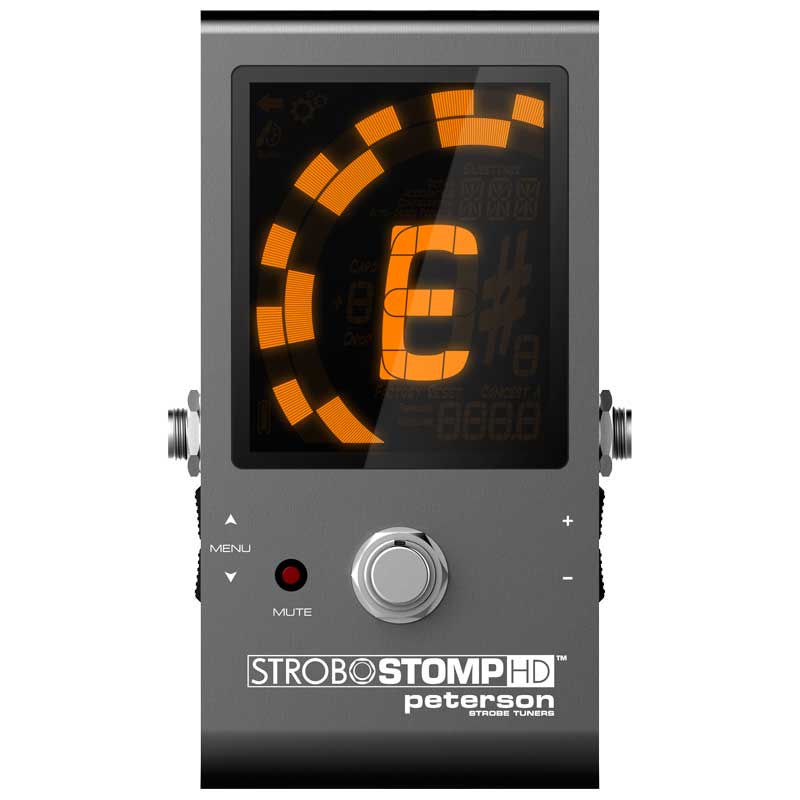
The Peterson StroboStomp HD is the most accurate tuner pedal you can buy at any price. Peterson's strobe tuning technology achieves ±0.1 cent accuracy — ten times more precise than the best standard chromatic tuners. This level of precision makes it the tuner of choice for studio engineers, luthiers, and professional performers who need to know their guitar is tuned as accurately as possible.
The "HD" designation refers to the high-definition display: a large, bright, wide-angle LCD that shows pitch deviation visually through moving strobe bands. When the bands stop moving, you're in tune. It's a uniquely intuitive display that experienced players learn to read faster than LED indicators. Peterson's "Sweetened Tunings" presets offer instrument-specific tuning offsets that compensate for the way different guitars naturally intonate — these presets alone can make your guitar sound better in a band mix. At around $169, it's the professional choice when accuracy is everything.
Pros
- ±0.1 cent strobe accuracy
- Large, highly readable HD display
- Sweetened Tunings presets for instrument compensation
- True bypass and buffered bypass switchable
- Solid, stage-proven build
Cons
- ~$169 premium price
- Strobe display has a learning curve
- Larger footprint than mini tuners
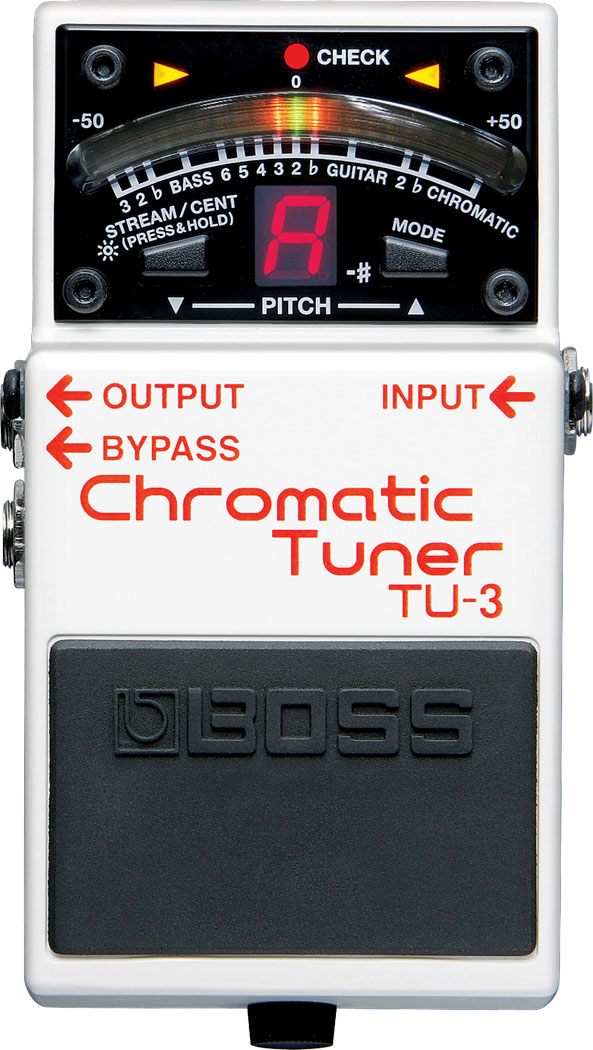
The Boss TU-3 is the most popular tuner pedal in the world for very good reasons. It tunes to ±1 cent accuracy, provides a bright LED display readable in virtually any lighting condition, and offers a buffered bypass that actively maintains your signal strength. The display uses a high-brightness LED strip that's legible in direct sunlight — a meaningful advantage over LCD-based tuners in outdoor settings.
The TU-3 supports guitar and bass, offers a chromatic mode, and includes a dedicated flat-tuning button for quick drop tuning. The buffer built into the TU-3's bypass is often cited as a benefit for long cable runs — it's one of the most respected buffers in the signal chain world. Build quality is quintessential Boss: the metal chassis and foot switch have survived decades of professional use. At around $99, it's the professional standard for a reason. If you don't know what tuner to get, get this one.
Pros
- Industry-standard reliability and accuracy (±1 cent)
- Extremely bright LED display readable in sunlight
- High-quality buffered bypass
- Guitar and bass support
- Flat tuning mode
Cons
- Not true bypass (buffered only)
- Less accurate than strobe tuners
- Larger size than mini options
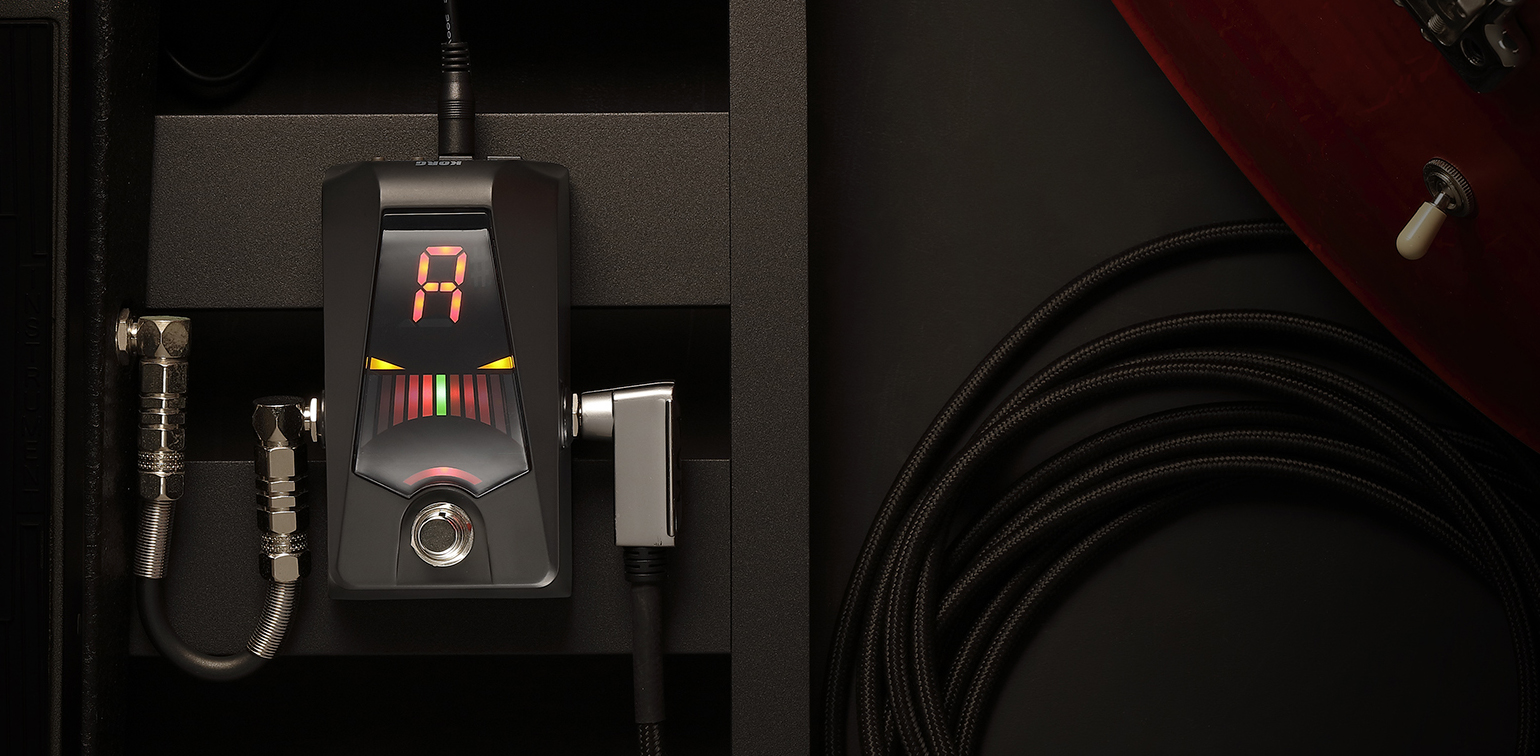
The Korg Pitchblack Advance delivers ±0.1 cent accuracy at a price point that undercuts Peterson significantly — around $79. That's strobe-level precision without the strobe price. Four selectable display modes (Regular, Strobe, Half-Strobe, and Mirror) give you options for how you prefer to read tuning deviation, which is a genuinely useful feature for players who have strong preferences about how tuner displays feel to use.
The display itself is excellent: large, bright, and readable from wide angles. True bypass keeps your signal path pristine. Support for flat tuning up to 6 semitones down covers Drop A and beyond for extended-range players. Korg's construction is solid, and the Pitchblack line has a strong reputation for longevity on professional boards. The Advance version over the standard Pitchblack adds the four display modes and the improved accuracy. At $79, it's the best value-for-accuracy tuner on this list.
Pros
- ±0.1 cent accuracy
- Four selectable display modes
- True bypass
- Flat tuning up to -6 semitones
- Excellent value vs. Peterson
Cons
- Display can be harder to read in bright sunlight vs. LED
- Less brand recognition than Boss or Peterson
- No sweetened tuning presets
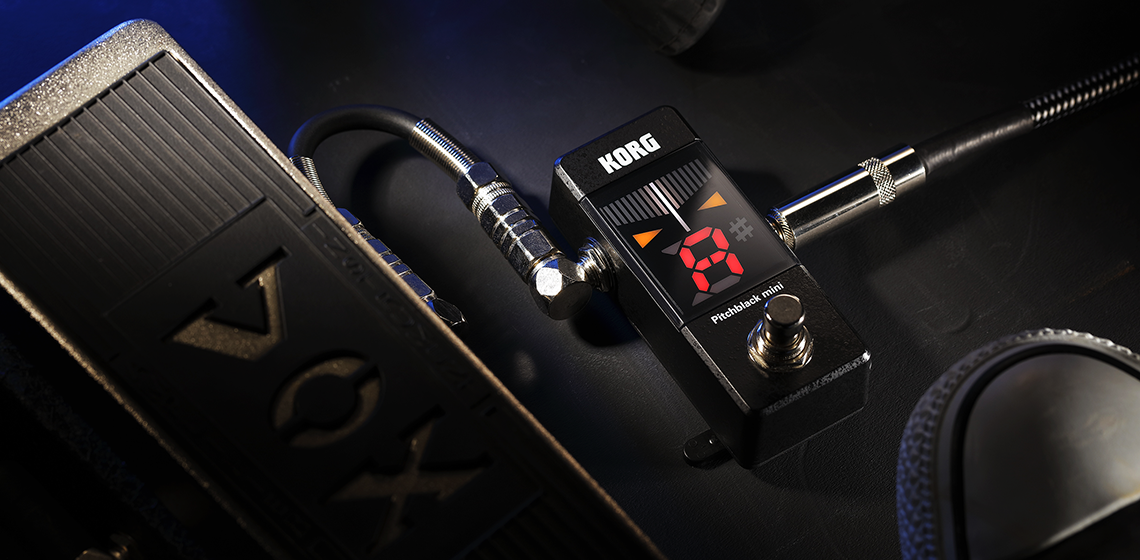
The Korg Pitchblack Mini proves that you don't need to sacrifice valuable pedalboard real estate for accurate tuning. It's approximately one-third the size of the standard Pitchblack Advance but maintains ±0.1 cent accuracy and delivers a surprisingly bright, readable display for its compact form factor. If you're running a Pedaltrain Nano or any space-conscious pedalboard setup, the Mini makes a compelling argument.
True bypass, flat tuning support, and chromatic mode are all present. The smaller display is a tradeoff — it's less immediately readable from distance compared to full-size tuners, but for players who tune while standing close to their board it's perfectly functional. At around $59, the Pitchblack Mini is also the most affordable ±0.1 cent tuner available. For players building compact or nano pedalboards, it's the obvious choice that doesn't compromise where it counts: accuracy.
Pros
- Extremely compact footprint
- ±0.1 cent accuracy
- True bypass
- Most affordable strobe-grade tuner
- Pedalboard Velcro-friendly size
Cons
- Smaller display harder to read from distance
- Single display mode
- Foot switch feels slightly less solid than full-size units
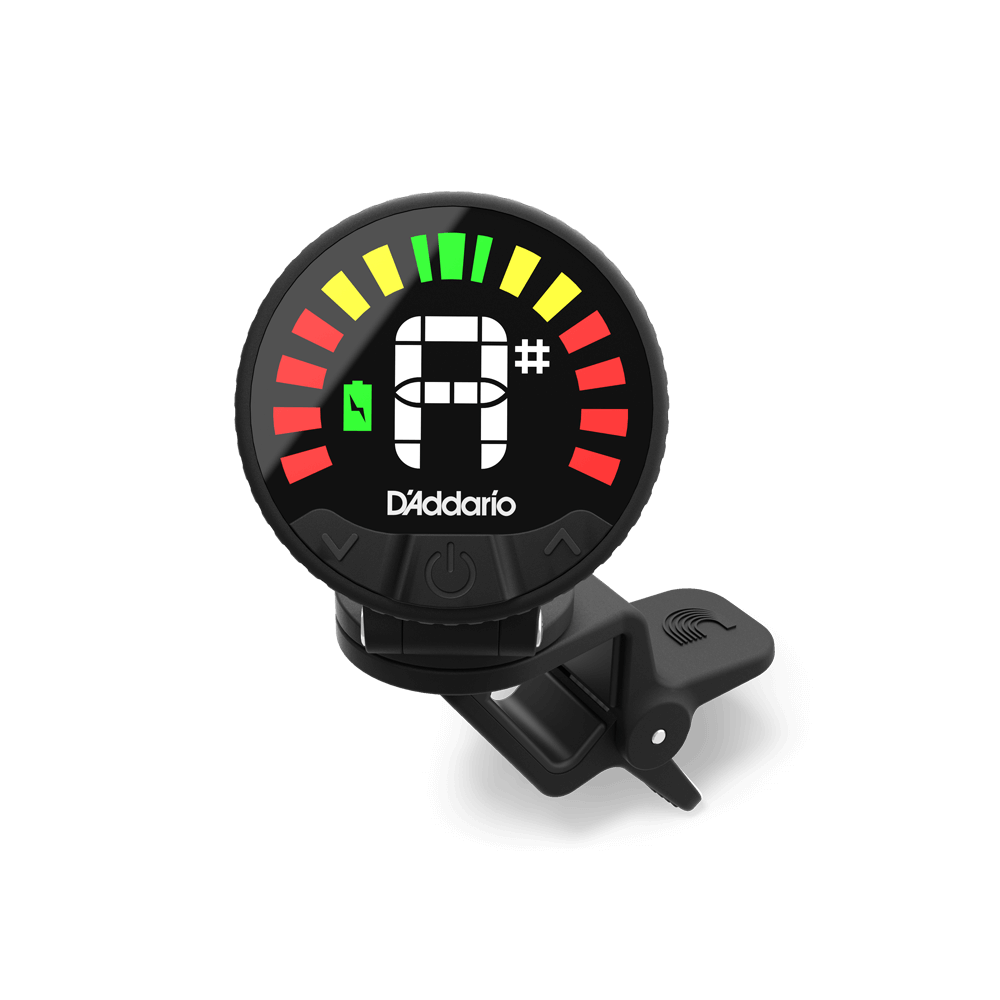
The D'Addario Nexxus 360 takes a different approach to the tuner pedal format: a circular display that rotates 360° so you can orient it for perfect readability no matter where it sits on your board or how you're positioned relative to it. This sounds like a gimmick until you've tried to read a tuner mounted sideways on a crowded pedalboard, and suddenly it's a genuinely useful feature.
Accuracy is ±0.5 cents — not strobe-level but solidly better than entry-level. The display is bright and clear. True bypass and a compact footprint make it easy to integrate. At around $59, it's an attractively priced alternative to the Korg Mini that trades some accuracy for the unique display orientation flexibility. For players who have struggled with tuner placement and readability on complex boards, the Nexxus 360's rotating display solves a real problem in an elegant way.
Pros
- 360° rotating display for any orientation
- True bypass
- Compact footprint
- Bright, clear display
- Good price at ~$59
Cons
- ±0.5 cent accuracy (not strobe-grade)
- Rotating mechanism could loosen over time
- Less accurate than Korg alternatives at similar price
Which Tuner Pedal Should You Buy?
The Boss TU-3 is still the workhorse standard — if you want something that just works reliably in any situation, buy it. But players who care about precision should look at the Korg Pitchblack Advance, which delivers ±0.1 cent strobe accuracy for $20 less than the TU-3. The Peterson StroboStomp HD is worth the premium for studio work and players who want to use Sweetened Tuning presets. The Korg Pitchblack Mini solves the space problem without sacrificing accuracy. And the D'Addario Nexxus 360 is the pick for players who've struggled with awkward tuner positioning on a packed board.
Frequently Asked Questions
Is a tuner pedal really more accurate than a clip-on tuner?
Usually, yes. Strobe tuners like the Peterson StroboStomp HD or Korg Pitchblack Advance offer ±0.1 cent accuracy, which is tighter than most clip-on tuners manage. A pedal tuner also mutes your signal while tuning, which a clip-on can't do.
Where should the tuner go in my signal chain?
First, before everything else, including compression and gain pedals. That way you're always tuning your raw guitar signal, not one that's already been colored or compressed by other pedals.
Do I need a strobe tuner, or is a chromatic tuner accurate enough?
For most players, a good chromatic tuner like the Boss TU-3 is plenty accurate. Strobe tuners like the Peterson StroboStomp HD matter more for studio work, alternate tunings, or players who are picky enough to hear the difference between ±1 cent and ±0.1 cent.
Is a tuner the thing I'm missing on my board?
A surprising number of players skip a dedicated tuner and rely on an app or a clip-on that eventually gets lost. Check your setup against ours in the Pedal Blindspot tool to see if a tuner, or another role, is the gap in your chain.