Best Practice Amps 2026: Great Tone at Bedroom Volume
The practice amp is the most-used piece of gear in most guitarists' lives — more than any pedal, more than any performance amp. You play through it every day. It shapes how your tone develops, how your playing sounds to your ears during practice, and whether you actually enjoy sitting down to play. Getting it right matters more than players typically acknowledge.
Modern practice amps have gotten genuinely good. Battery-powered, Bluetooth-streaming, USB recording, multiple amp voices, built-in effects — small practice amps in 2026 offer capabilities that would have required a full studio rig a decade ago. We tested five of the best to find which ones deliver real playing satisfaction at bedroom volume.
What Makes a Great Practice Amp?
The challenge of a practice amp is that it operates at volumes where traditional amp physics work against you. Guitar amplifiers are designed to sound best when pushed — a 100-watt Marshall at rehearsal volume sounds disappointing because the speaker isn't working, the tubes aren't saturating, and the room isn't pressurized. At bedroom volume, the same dynamics don't exist.
Good practice amps solve this through speaker design (a quality 6- or 8-inch speaker can sound surprisingly full at low volumes), power scaling (attenuating a higher-power circuit for bedroom use while preserving the feel), and DSP processing (modeling circuits that recreate power amp saturation and speaker characteristics at any volume). The best modern practice amps sound genuinely excellent at low volumes because they're engineered for that use case specifically.
USB audio interface capability is increasingly important: being able to plug your practice amp directly into your DAW and record without additional hardware changes the value proposition significantly. If your practice amp doubles as your home recording interface, its value doubles.
Key Features to Prioritize
- Volume at bedroom levels: Does it sound good turned down? Many amps lose tone character at low volumes. Look for power attenuation or voiced circuits specifically designed for quiet play.
- Built-in effects: Reverb at minimum. Delay and modulation are bonuses. Having reverb built in means not needing a reverb pedal for basic practice.
- Headphone output: Essential for silent practice. The headphone output quality varies enormously — cheap amps have harsh, digital-sounding headphone outputs; better amps have voiced cabinet simulation in the headphone circuit.
- Aux input: Play along with backing tracks, songs, or YouTube without needing a separate speaker. Almost all modern practice amps include this.
- USB recording: Direct recording capability without additional hardware is a significant practical advantage.
- Battery power: For players who practice outdoors, at rehearsal spaces without convenient outlets, or while traveling, battery operation is a genuine quality-of-life feature.
The Rankings
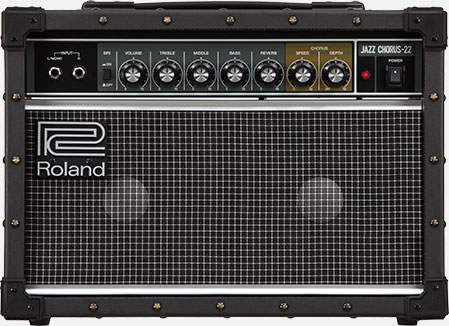
The Roland JC-22 is the small-format version of the iconic Jazz Chorus amplifier that has defined clean electric guitar tone since the 1970s. At 30 watts through two 6.5-inch speakers, it produces real stereo chorus that sounds dramatically bigger and wider than the physical size suggests. The JC-22 sounds exceptional at bedroom volumes — the clean tone is glassy, detailed, and musical in a way that few practice amps can match.
Built-in Roland chorus (the same circuit ancestry as the legendary JC-120) is outstanding. A distortion channel covers heavier sounds. Reverb, effects loop, and stereo aux input round out the feature set. The JC-22 is heavier and more expensive than the Katana Mini (around $499), but the sound quality difference is audible. For players who prioritize tone above all else in a practice amp and want something that will sound genuinely excellent for years, the JC-22 is worth every dollar.
Pros
- Legendary JC clean tone in compact format
- True stereo chorus built in
- Sounds excellent at low volumes
- Effects loop for pedalboard integration
- Quality build that will last decades
Cons
- ~$499 — significantly more expensive than competition
- Heavier than battery-powered alternatives
- No USB recording
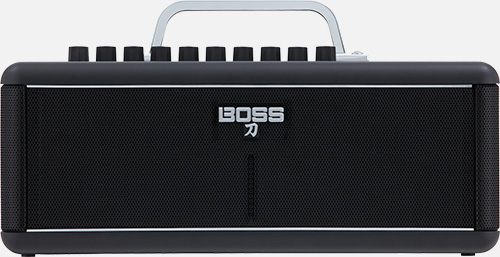
The Boss Katana Air takes the acclaimed Katana tone engine — which powers some of the most successful gigging amplifiers in recent memory — and adds wireless guitar connectivity. Using the included transmitter (which plugs into your guitar's output jack), you can play without a cable up to 65 feet away. It's a genuinely liberating experience for home practice: walk to the kitchen, practice in a different room, move around without managing cable length.
The Katana tone engine delivers five amp characters (Clean, Crunch, Lead, Brown, Acoustic) with built-in effects and a full effects chain. The Tone Studio app provides deep editing from your smartphone. Bluetooth audio streaming lets you play along with music from your phone. USB recording capability is included. At around $299, the Katana Air costs more than the Katana Mini but the wireless freedom and additional features justify the premium for players who value that flexibility.
Pros
- Wireless guitar connectivity (included transmitter)
- Full Katana tone engine with 5 amp characters
- Bluetooth music streaming
- USB recording
- Smartphone app for deep editing
Cons
- ~$299 price point
- Wireless transmitter adds bulk to guitar jack
- Battery life limited when playing wirelessly
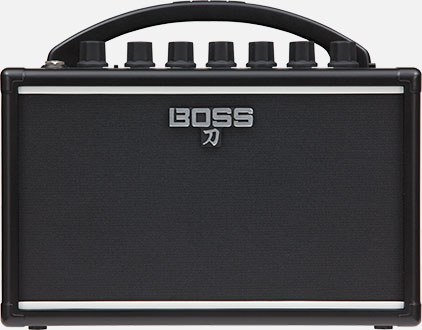
The Boss Katana Mini is the gateway into Boss's acclaimed Katana amplifier lineup. At 7 watts through a 4-inch speaker, it's genuinely tiny — about the size of a hardcover book — but it delivers real Katana amp character in three voices: Clean, Crunch, and Lead. The sound quality at this size and price point is remarkable. It genuinely sounds like a Katana amp, not a toy.
Six AA batteries power the Katana Mini for extended practice sessions, making it completely mobile. A delay effect is built in. The headphone output includes cabinet simulation for good silent practice tone. Aux input for playing along with music. At around $99, the Katana Mini is one of the best-value practice amps available. It fits in a bag, sounds better than anything in its size class, and the AA batteries mean you're never stuck without power. For traveling musicians or players who need a compact, quality practice solution, the Katana Mini is hard to beat.
Pros
- True Katana amp voicing in a tiny package
- Battery-powered (6 AA) for full portability
- Three amp voices plus built-in delay
- Excellent headphone output with cab sim
- Outstanding value at ~$99
Cons
- 4-inch speaker limits volume and low-end
- No reverb (delay only)
- No USB recording

The Line 6 Catalyst 60 is positioned as a practice amp that can also gig — 60 watts through a single 12-inch speaker gives it enough volume to compete in rehearsal and small venue situations while maintaining excellent tone at bedroom volumes. The HX-inspired amp modeling delivers six amp channels covering the full spectrum from pristine clean to high-gain modern metal, all sounding noticeably better than competing practice amps in the same price range.
Six preset channels are footswitch-accessible, reverb and modulation effects are built in, and the headphone output includes cabinet simulation. USB recording works natively as an audio interface. At around $249, it costs more than the Katana Mini but delivers significantly more power, better speaker, and more tonal range. For players who want one amp that covers practice at home and playing with a drummer, the Catalyst 60 is the smart choice — it grows with your playing situation.
Pros
- 60W — powerful enough for rehearsal and small gigs
- HX-inspired modeling for six distinct amp voices
- Excellent headphone output with cab sim
- USB audio interface built in
- Sounds great at any volume
Cons
- ~$249 — more expensive than Mini-style amps
- Larger/heavier than compact alternatives
- No battery power
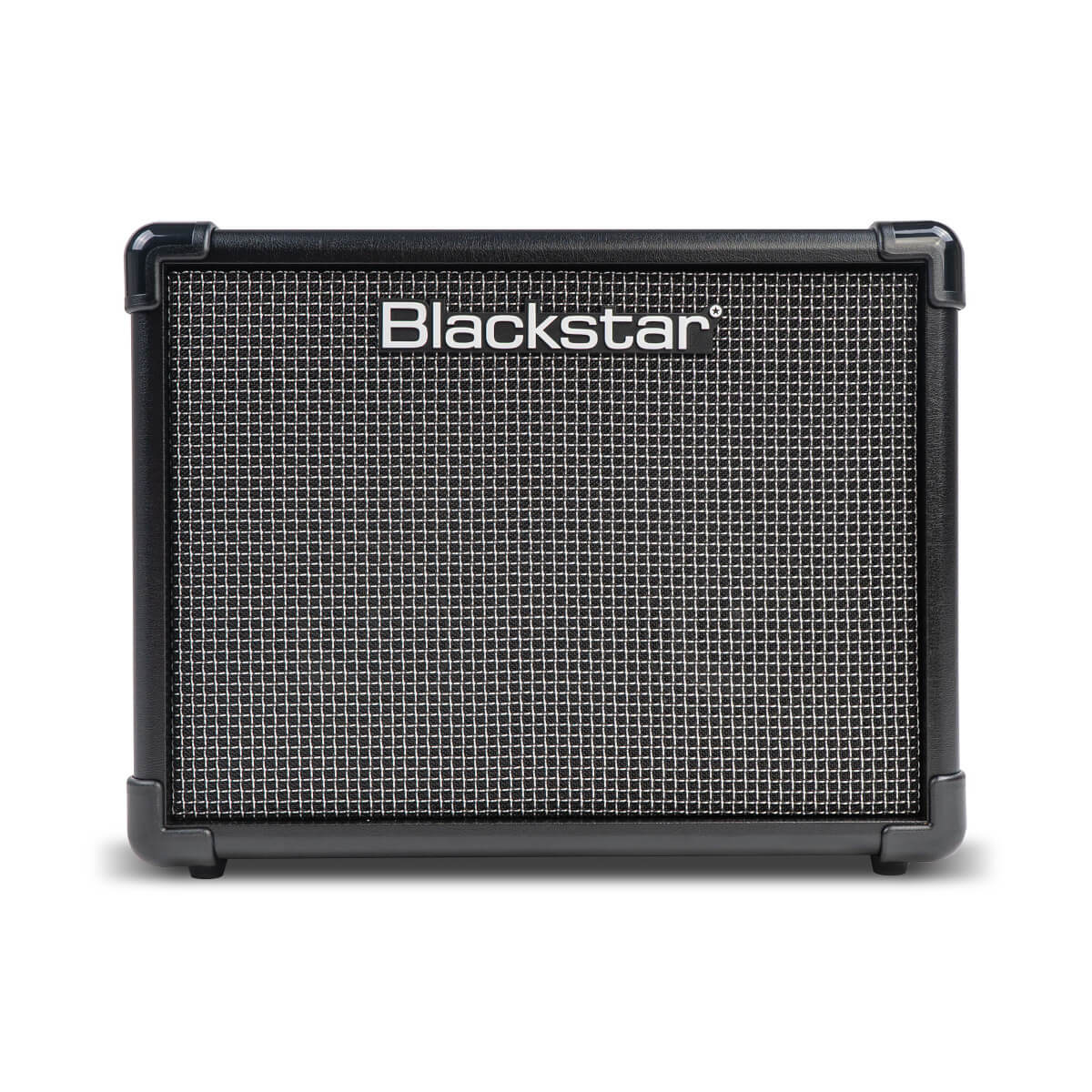
The Blackstar ID:CORE V4 Stereo 10 delivers something unusual in the budget practice amp category: true stereo sound through two 3-inch speakers, which creates a noticeably wider, more immersive listening experience than comparable mono amps. Six voices (two Clean, two Crunch, two Overdrive) cover a wide range of tones. Built-in effects (reverb, delay, modulation, chorus, and more via the Insider app) add depth.
The SuperWide stereo effect is most noticeable when playing with modulation or reverb — the stereo image makes even a small amp feel spacious and professional. USB recording capability works as an audio interface. The Blackstar Insider app provides deep patch editing from a smartphone. At around $99 (same as the Katana Mini), the ID:CORE V4 Stereo 10 competes directly but wins on features — more voices, stereo sound, more built-in effects. It trades the Katana's superior tonal character for greater feature depth at the same price.
Pros
- True stereo through two speakers
- Six amp voices covering wide tonal range
- Extensive built-in effects
- USB recording/interface capability
- Smartphone app for deep editing
Cons
- Two 3-inch speakers limit low-end
- Blackstar voicing isn't for everyone
- No battery power
Which Practice Amp Should You Buy?
The Boss Katana Mini is the smart default for players who want a compact, quality practice amp that goes anywhere. Players who can invest more and value tone should look at the Roland JC-22 — it's the finest-sounding small amp on this list and will serve you for decades. The Boss Katana Air is the pick for wireless freedom. The Line 6 Catalyst 60 is ideal if you need practice-to-gig capability. And the Blackstar ID:CORE V4 Stereo 10 is the feature-packed budget choice that makes the most of every dollar.
Frequently Asked Questions
Do I need a practice amp if I already have pedals?
Yes, if your main amp is too loud for regular home use. A dedicated practice amp with built-in effects, like the Boss Katana Mini or Blackstar ID:CORE, lets you dial in a usable tone at low volume without your pedals fighting an amp that only sounds good cranked.
Can a practice amp handle actual gigs?
Some can. The Line 6 Catalyst 60 is specifically built to scale from bedroom practice to small venue gigs, and the Roland JC-22 has enough clean headroom for small rooms. The truly portable options like the Katana Mini are better kept to practice and jam sessions.
Are built-in amp effects good enough, or do I still need pedals?
Built-in effects on amps like the Katana series and Blackstar ID:CORE are genuinely usable for practice and even light gigging. Most serious players still prefer dedicated pedals for their main gain and modulation sounds, but a practice amp's onboard effects are more than fine for home use.
What pedals actually pair well with a small practice amp?
Not every pedal makes sense with a small amp's limited headroom. Our Tone Finder takes your amp into account and recommends a pedal chain that actually works at practice-amp volume instead of just sounding good on paper.