Best Guitar Strings 2026: Top Picks for Electric and Acoustic
Guitar strings are the most frequently replaced, most underappreciated component of your rig. Players obsess over pedals and amps while leaving strings on for months — but a fresh set of quality strings does more for your tone than almost any pedal swap. The right strings for your playing style make your guitar feel better under your fingers, intonate more accurately, and sound brighter and more dynamic.
We tested five string sets across multiple guitars and playing styles, evaluating tone, feel, longevity, and value. This list covers both electric and acoustic options because many players play both, and string quality matters equally on either instrument.
Why Strings Matter More Than You Think
Every note you play starts with a string vibrating. The material, gauge, and condition of that string determines the attack, sustain, harmonic content, and feel of every note before your signal reaches any pedal or amp. Dead strings compress harmonics, reduce sustain, and fight your intonation. Fresh strings respond more dynamically, intonate more accurately, and let the natural character of your guitar come through.
Professional guitar techs change strings before every show — not because strings break that frequently, but because the tonal difference between a 5-day-old set and a new set is audible. If you're recording, always put on fresh strings. If you're gigging regularly, a string change once a week or every two weeks maintains consistent tone. If you practice daily, once a month minimum.
Coated strings change this calculus significantly. Brands like Elixir can last 3–5 times longer than uncoated strings before losing their brightness. The tradeoff is a slightly different feel and, for some players, a slightly different tone character. Whether coated strings are "worth it" depends entirely on how much you value longevity vs. the feel of traditional uncoated strings.
Gauges, Materials, and Coatings Explained
- Gauge: String gauge (the thickness) affects feel and tone. Light gauges (.009-.042) are easier to bend and fret but have less sustain and volume. Heavy gauges (.011-.049 and up) have more bass response and volume but require more finger strength. Most players start with 10s (.010-.046) and adjust from there.
- Electric string materials: Nickel-wound strings (like Ernie Ball Slinkys and D'Addario EXL) are the standard for electric guitar — balanced tone, comfortable feel. Pure nickel strings are warmer and vintage-voiced. Stainless steel strings are brighter and last longer but feel rougher.
- Acoustic string materials: 80/20 Bronze (brass) strings are bright but fade quickly. Phosphor Bronze strings are warmer and last longer — they're the most popular acoustic choice for good reason.
- Coated vs uncoated: Coated strings (Elixir being the leader) use a polymer coating to seal out sweat and oils that corrode strings. They last significantly longer but feel slightly different. Ideal for players who hate changing strings frequently.
- Plain vs wound: The high e, B, and usually G strings are plain (unwound). The low E, A, and D are wound with metal wrap wire. The wound strings change tone more noticeably as they age and accumulate grime in the windings.
The Rankings

The Ernie Ball Regular Slinky is the best-selling electric guitar string in the world, and that's not a coincidence. The 10-46 gauge hits the sweet spot between playability and tone — light enough for comfortable bending across a full range, heavy enough for meaningful bass response and sustain. The nickel-wound construction gives a balanced, musical tone that sits well in any mix.
More great recordings have been made on Regular Slinkys than on any other string. Jimi Hendrix played them. Stevie Ray Vaughan played heavier Ernie Ball strings. Virtually every professional player has, at some point, used Ernie Ball as their standard. The reason is consistent quality: Ernie Ball strings are made to tight tolerances, correctly balanced across the set, and reliably consistent from pack to pack. At around $7 per set (less in multi-packs), they're also excellent value. If you're not sure what strings to use, start here.
Pros
- World's most popular electric guitar string
- Balanced nickel-wound tone
- 10-46 sweet-spot gauge
- Excellent value, especially in multi-packs
- Consistent quality from pack to pack
Cons
- Uncoated — dies faster than Elixir
- No extended longevity features
- Same formula for decades (no innovation)
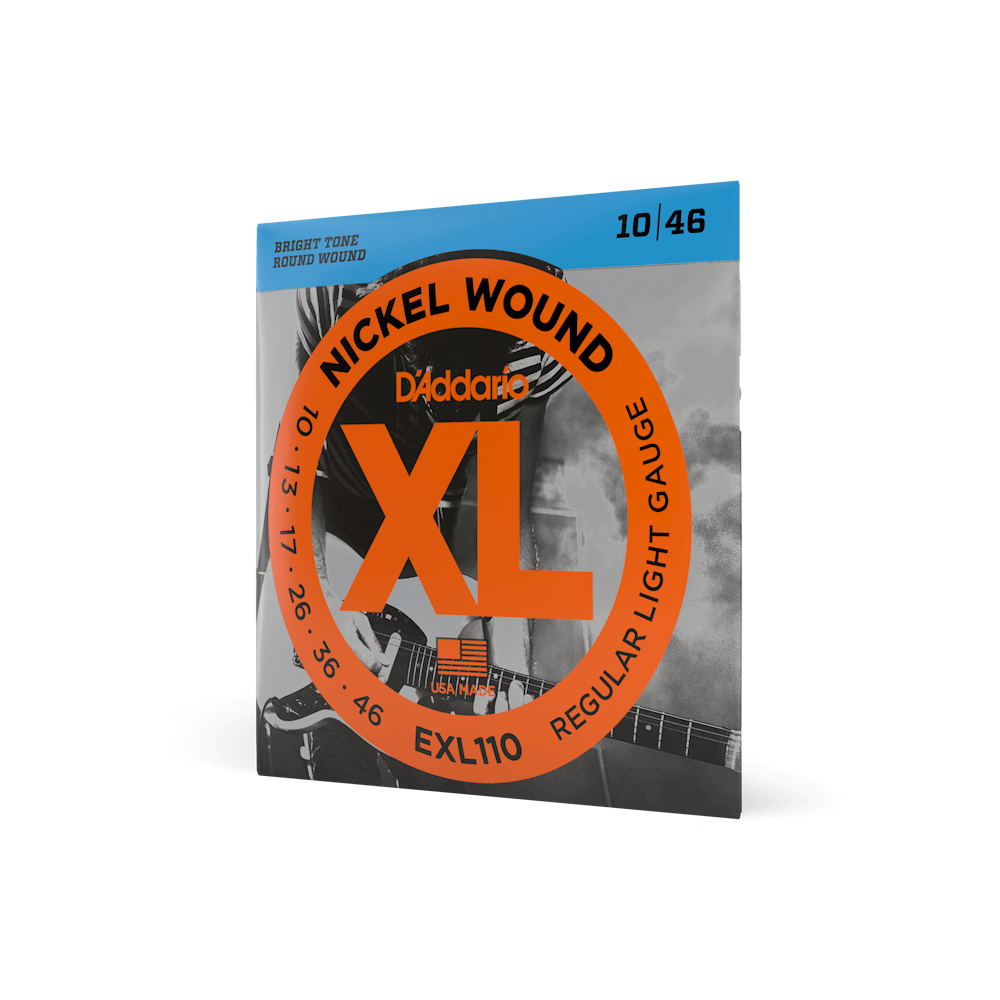
D'Addario EXL110s are the other half of the electric string debate: Ernie Ball vs D'Addario is the Fender vs Gibson of the string world. The EXL110 uses nickel-plated steel (slightly brighter than pure nickel) wound over a hexagonal core wire, which creates more consistent contact with the core and tighter pitch accuracy. D'Addario's laser-sorted manufacturing process removes any string that doesn't meet their tolerance specifications before it ships.
The result is a string that many players feel intonate slightly better than competitors — especially noticeable on guitars with intonation challenges. The tone is bright and articulate with clear fundamental and good sustain. The feel is smooth and comfortable. At around $7-8 per set (and significantly cheaper in multi-packs), D'Addario EXL110s are a direct competitor to Regular Slinkys in every way. Which you prefer often comes down to personal taste, so try both and decide. Many players keep both brands on different guitars.
Pros
- Laser-sorted for tight pitch accuracy
- Bright, articulate nickel-plated steel tone
- Hex core for consistent winding contact
- Excellent multi-pack value
- D'Addario's quality control reputation
Cons
- Slightly brighter than some players prefer
- Uncoated — standard longevity
- Hex core feels slightly stiffer than round core to some
Elixir invented the coated guitar string category and still makes the best version. The Nanoweb coating is ultra-thin — thinner than any competitor — which preserves the natural feel of the string while dramatically reducing corrosion from finger oils, sweat, and humidity. A set of Elixir Nanowebs can stay bright and playable for three to five times longer than an equivalent uncoated set.
The tone is slightly different from uncoated strings — a touch warmer, with slightly reduced pick attack and a smoother feel on the wound strings. Many players love this characteristic; some prefer the rawer feel of uncoated nickel. The 10-46 Nanowebs are the best choice for players who want consistently great tone without frequent string changes. At around $15 per set (versus $7-8 for uncoated), the math often works out in Elixir's favor when you factor in longevity — you're buying half as many sets while maintaining good tone for much longer.
Pros
- 3–5x longer life than uncoated strings
- Ultra-thin Nanoweb coating preserves natural feel
- Consistent tone throughout longer lifespan
- Good value when lifespan is factored in
- Available in multiple gauges
Cons
- ~$15 per set — more expensive upfront
- Slightly different feel than uncoated
- Coating does eventually wear and peel
GHS Boomers have been a staple of rock and metal guitar for decades. The nickel-plated steel construction has a brighter, more aggressive character than standard nickel-wound strings, giving your attack more bite and presence in the mix. Zakk Wylde and many hard rock and metal players have used Boomers as their go-to for exactly this reason — the brightness cuts through dense band mixes without needing additional EQ boost.
The round core construction gives Boomers a slightly different feel than hex core strings — many players describe it as more "vintage" and slightly more flexible under the fingers. They wear quickly in terms of brightness (round core strings lose their tone faster than hex core), but fresh Boomers sound spectacular. At around $7 per set they're in the same price bracket as Ernie Ball and D'Addario. Ideal for players who want aggression and cut in their tone, and who change strings frequently enough to keep that freshness.
Pros
- Bright, aggressive nickel-plated tone
- Round core for vintage feel and flexibility
- Excellent for rock, metal, and high-gain
- Long history of professional use
- Very affordable
Cons
- Round core loses brightness faster than hex core
- Less balanced than EXL or Slinky for clean tones
- Not ideal for jazz or acoustic styles

For acoustic guitar, the Ernie Ball Earthwood Phosphor Bronze set is one of the finest balanced acoustic strings available. Phosphor bronze wrapping adds warmth, complexity, and body to the acoustic tone compared to straight 80/20 bronze, while also resisting corrosion and maintaining brightness longer. The 11-52 gauge is the standard medium-light acoustic gauge — enough tension for good volume and projection without being difficult to play.
The Earthwood series has appeared on countless acoustic recordings. The balance between the plain treble strings and wound bass strings is well-voiced for both fingerpicking and strumming. Sustain is excellent. The strings feel smooth and comfortable. At around $8 per set, they're an excellent value for acoustic players. Whether you play folk, country, bluegrass, singer-songwriter, or any acoustic style, the Earthwood Phosphor Bronze is a reliable choice that will serve you well.
Pros
- Warm, full phosphor bronze tone
- Better corrosion resistance than 80/20 brass
- Excellent balance across all strings
- Great sustain and projection
- Versatile for any acoustic style
Cons
- 11-52 may be stiff for some players (10s available)
- Uncoated — standard acoustic string longevity
- Slightly less bright than 80/20 bronze
Which Guitar Strings Should You Buy?
For electric guitar, start with either the Ernie Ball Regular Slinky 2221 or D'Addario EXL110 — both are excellent, and your preference will likely come down to the slightly warmer (Ernie Ball) vs. slightly brighter (D'Addario) character. Players who hate changing strings should switch to Elixir Nanoweb immediately. Players who want maximum brightness and aggression should try GHS Boomers. And for acoustic guitar, the Ernie Ball Earthwood Phosphor Bronze is an outstanding all-around choice at a fair price.
Frequently Asked Questions
How often should I change my guitar strings?
For regular players, every 4 to 6 weeks for uncoated strings, or every 2 to 3 months for coated strings like Elixir Nanoweb. If your strings look dull, feel rough, or won't hold tuning, it's time regardless of the calendar.
What string gauge should I use?
10-46, often called regular slinky, is the standard starting point for most electric guitarists and works for most playing styles. Go lighter at 9-42 for easier bending and lead work, or heavier at 11-48 and up for drop tunings and a fuller low end.
Are coated strings worth the extra cost?
If you play often, sweat a lot, or hate changing strings, yes. Elixir Nanoweb strings last two to three times longer than uncoated strings for a modest price bump. If you like the crispest possible tone and don't mind more frequent changes, uncoated strings like GHS Boomers still edge them out.
Do new strings change what pedals I need?
A fresh set of strings changes your attack and brightness more than most players expect, which can shift how your pedals react. If your tone feels off after restringing, run your setup through our Tone Finder to see if your pedal chain needs a tweak to match.