Best Pedalboard Cases 2026: Protect Your Rig, Simplify Your Gig
A pedalboard does more than hold your pedals. It organizes your signal chain, protects your gear in transit, presents a professional setup on stage, and — when done well — makes your entire performance setup faster to deploy and pack down. The wrong pedalboard makes gigging a chore. The right one makes your setup invisible so you can focus on playing.
We evaluated five pedalboard systems across portability, protection quality, mounting versatility, and value. This list covers nano boards for ultra-compact rigs through full mid-size boards for comprehensive setups. Our focus: boards that come with reliable soft cases and represent the real-world choice for working players.
Why Your Pedalboard System Matters
Every pedal you own represents money and tone. A loose pile of pedals connected by cables is fragile — a single tripped cable during load-in can cascade into a ruined performance. A well-organized pedalboard eliminates that risk: pedals are secured by Velcro, cables are managed and strain-relieved, and the entire setup loads into a case in under two minutes.
The case matters as much as the board itself. Soft cases are lighter and more portable; hard cases offer more protection for touring situations. The rails-and-Velcro system determines how many pedals you can fit and how you can arrange them. Cable routing under the board (Pedaltrain's signature feature) versus on-board cable management (Temple Audio's approach) changes how clean your board looks and how easy it is to re-route if you change your signal chain.
A good pedalboard also simplifies soundcheck. Plug your guitar into the board's input, one cable from the output to the amp, one power supply cable to the wall. Three connections and your entire signal chain is live. Players who don't use a pedalboard often spend ten minutes at soundcheck untangling cables and troubleshooting connections. A good board eliminates that entirely.
What to Look for in a Pedalboard
- Size and capacity: How many pedals do you need to fit? Be honest and leave room to grow. A nano board is perfect for five pedals; a mid-size board handles ten to fifteen. Don't buy undersized and regret it immediately.
- Cable routing: Under-board cable routing (like Pedaltrain's open rail design) keeps your top surface clean. On-board cable channels (like RockBoard's design) offer different routing flexibility. Both work; choose based on your preference.
- Case quality: Does the included case protect adequately for how you transport gear? Soft cases are fine for car travel; consider hard cases for van touring or air travel.
- Mounting system: Standard Velcro works for most players. Quick-release systems (Temple Audio's Plate System) allow instant pedal reconfiguration without peeling and re-sticking Velcro. Worth it for players who frequently change their rig.
- Power supply integration: Can you mount a power supply under the board or does the design accommodate it? Isolated power supplies mounted under the board keep the surface clean and power distribution elegant.
- Weight: For gigging musicians who carry their gear, board weight matters. Aluminum boards (Pedaltrain) are notably lighter than steel designs at equivalent sizes.
The Rankings
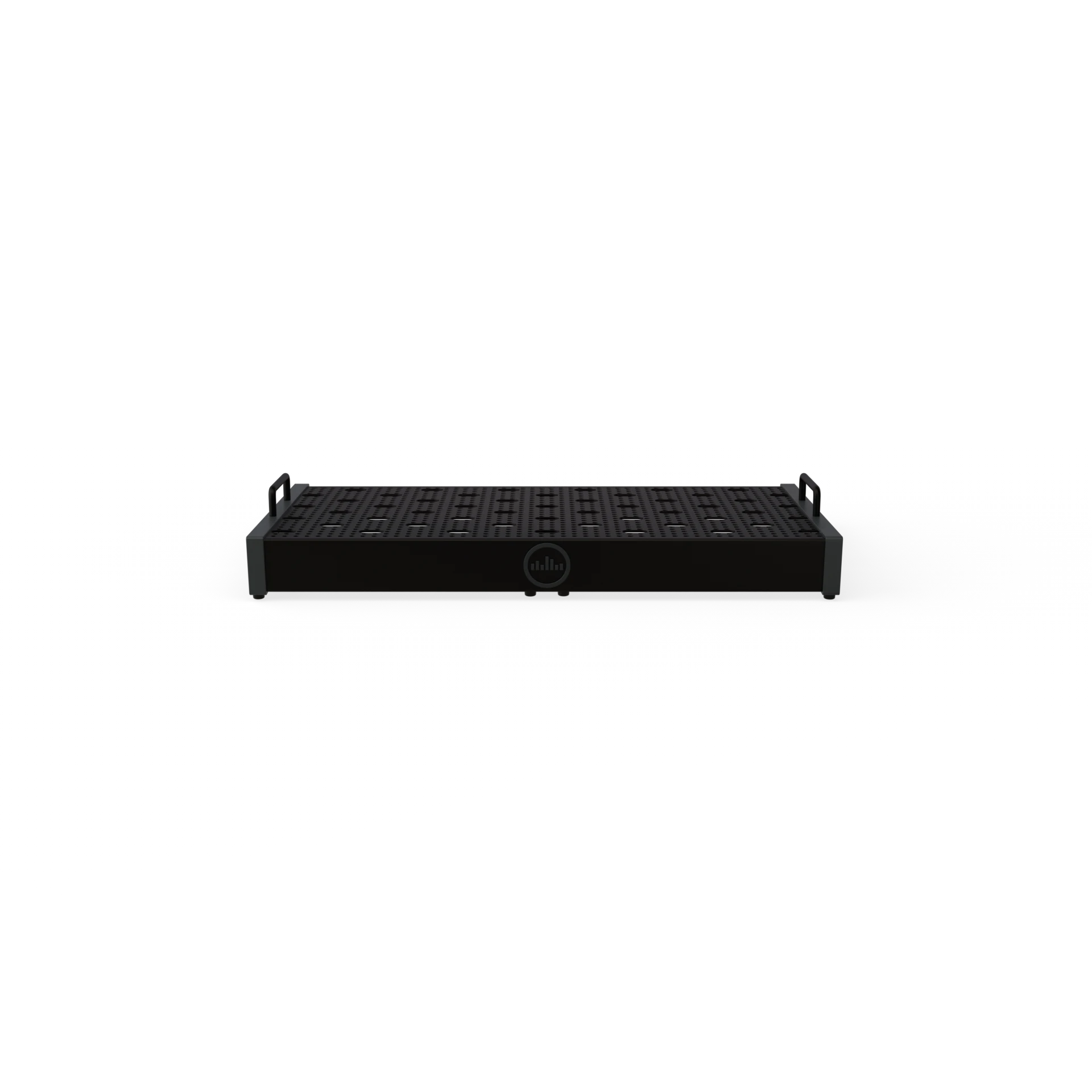
The Temple Audio DUO 24 represents the most sophisticated approach to pedalboard design available. Instead of Velcro, Temple Audio uses a proprietary Plate System: aluminum mounting plates attach to the bottom of your pedals, and those plates click into the board with a simple push-and-lock mechanism. Reconfiguring your signal chain takes seconds — pull one pedal out, click another in, instantly re-routed without ever peeling Velcro or repositioning cable runs.
The aluminum construction is extremely rigid and lightweight. The board surface is clean and professional-looking. The DUO 24 accommodates a significant number of pedals while maintaining an efficient footprint. For touring players who frequently update their rigs, the Plate System's flexibility is genuinely transformative — you can swap one pedal for another between songs if you have the plates pre-installed. At around $249 for the board alone (plates purchased separately per pedal), it's a premium investment that pays for itself in saved time and eliminated Velcro frustration.
Pros
- Proprietary Plate System for instant pedal reconfiguration
- Premium aluminum construction
- Clean, professional surface design
- Excellent for players who frequently change rigs
- Extremely sturdy and lightweight
Cons
- ~$249+ for board, plus plate cost per pedal
- Plates add thickness to pedal bottoms
- Proprietary system requires commitment to the ecosystem
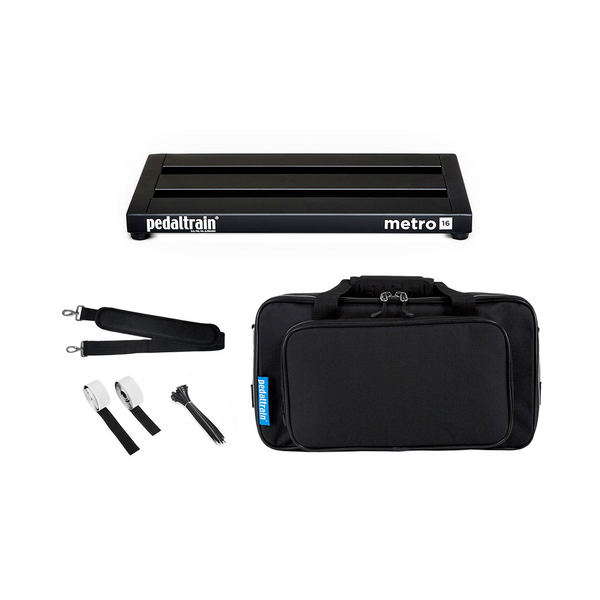
The Pedaltrain Metro 16 is the sweet spot of the Pedaltrain lineup: large enough to hold a comprehensive pedalboard setup (8-12 standard pedals or more with minis) while remaining compact and light enough to carry easily. The angled aluminum rail design is immediately usable: attach Velcro to your pedals, stick them down, route cables under the rails, and you have a professional-looking, organized board in under an hour.
The included soft case is excellent — thick padding, durable nylon exterior, backpack straps for hands-free transport. The open rail design under the board leaves generous space for mounting a power supply (Voodoo Lab Pedal Power, MXR DC Brick, etc.) and routing cables cleanly. At around $149 including the soft case, the Metro 16 is outstanding value. It's the board that most serious working players would choose as their primary mid-size rig, and the Pedaltrain ecosystem is so widely adopted that accessories, power supply mounting solutions, and advice are universally available.
Pros
- Perfect capacity for 8-12 standard pedals
- Excellent included soft case with backpack straps
- Open rail design for under-board power and cables
- Lightweight angled aluminum construction
- Outstanding value at ~$149 with case
Cons
- Standard Velcro mounting — no quick-release
- Soft case doesn't protect against serious impact
- Angled surface isn't for everyone
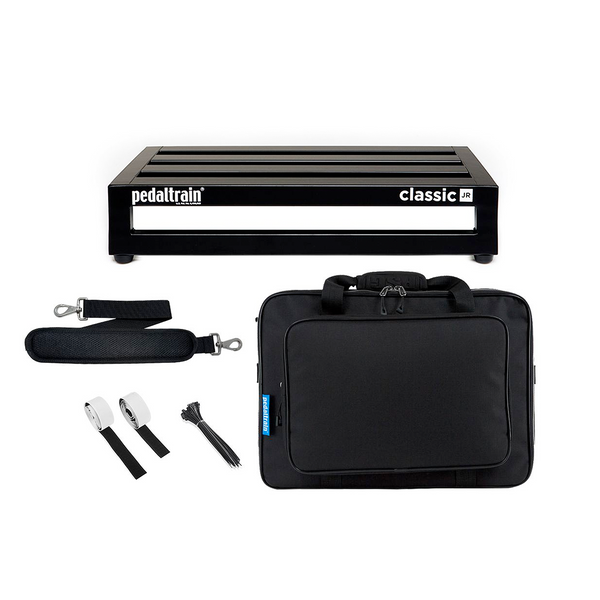
The Pedaltrain Classic JR is the compact version of Pedaltrain's Classic series — a full-size pedalboard format with more surface area than the Metro series. The Classic JR's flat surface (versus the Metro's angled surface) accommodates taller pedals like wah units, expression pedals, and volume pedals more naturally. Players with rocker-style pedals on their board will appreciate the flat profile.
Four horizontal rails with generous spacing underneath accommodate large power supplies and cable bundles with ease. The Classic JR ships with a quality soft case that includes interior straps and padding. At around $169 with the soft case, it's a reasonable step up from the Metro 16 when you need the flat surface profile or additional capacity. The construction is the same aircraft-grade aluminum as all Pedaltrain products — it will survive decades of gigging without any meaningful wear.
Pros
- Flat surface accommodates rocker/wah pedals naturally
- More surface area than Metro series
- Aircraft-grade aluminum — built for decades of use
- Excellent cable and power routing underneath
- Includes quality soft case
Cons
- Larger and heavier than Metro series
- ~$169 — higher investment
- Flat surface can be harder to angle for reading knobs
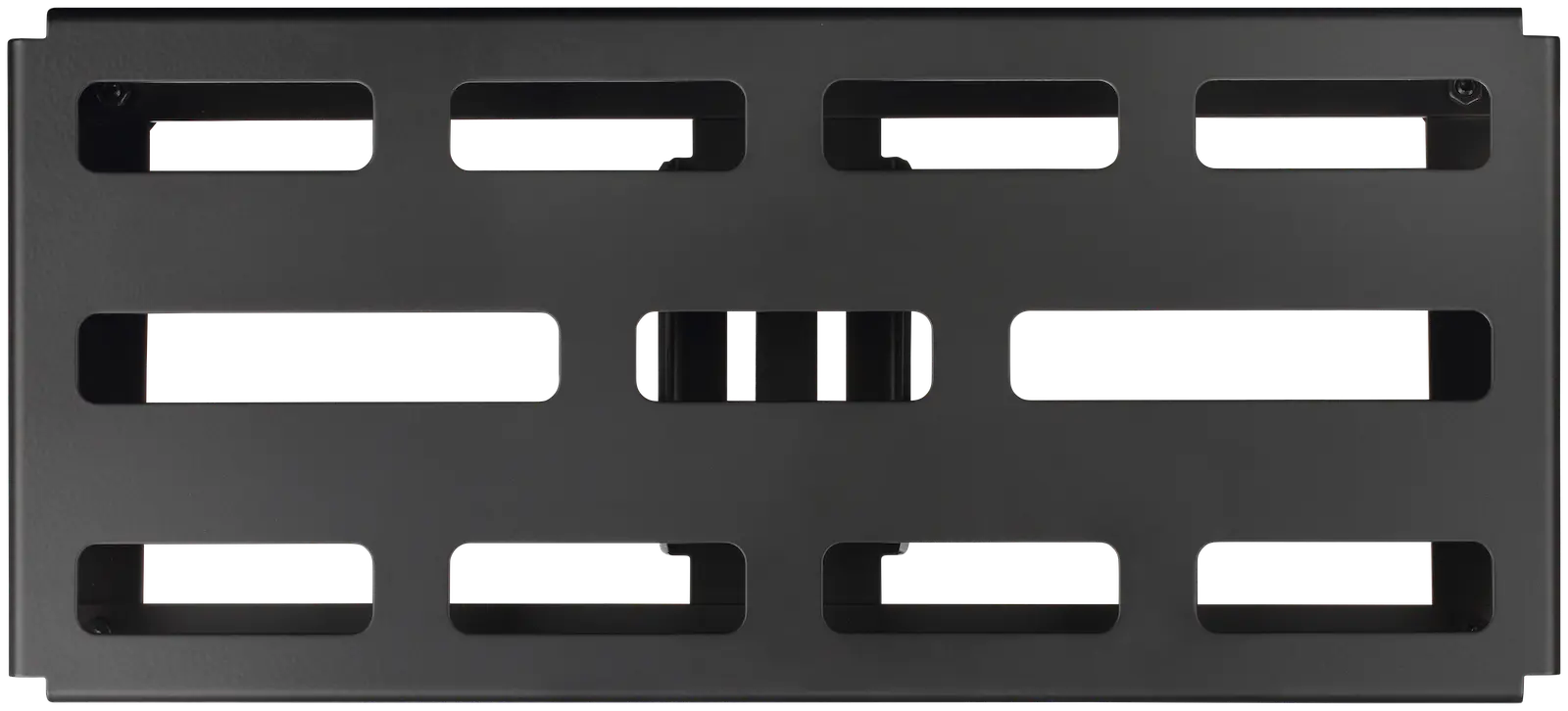
The RockBoard DUO 2.0 B takes a fundamentally different approach to cable management: instead of routing cables under the board (Pedaltrain style), the RockBoard includes built-in cable routing channels on the board surface itself. Patch cables run through designated channels, completely hidden from view. The result is one of the cleanest-looking pedalboard setups possible — cables simply don't appear on the surface.
The DUO designation refers to the two-tier design: two rows of pedal mounting surface arranged in a step configuration, which puts rear-row pedals slightly higher for better visibility and access. The board includes a bag for transport. At around $99, the RockBoard DUO 2.0 B offers excellent value for the integrated cable management feature alone. For players who hate cable clutter and want a visually clean board, RockBoard's approach is distinctly better than any Pedaltrain equivalent for aesthetics.
Pros
- Built-in cable routing channels for invisible cables
- Two-tier design for better pedal access
- Excellent value at ~$99
- Very clean visual presentation on stage
- Solid construction at mid-price
Cons
- Cable channel system limits routing flexibility
- Included bag less padded than Pedaltrain soft cases
- Less ecosystem support than Pedaltrain
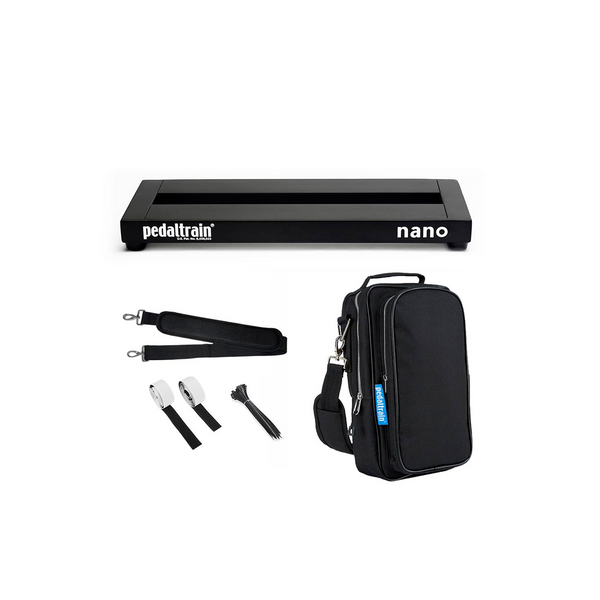
The Pedaltrain Nano Plus is the definitive compact pedalboard. At approximately 14×5 inches, it fits comfortably in an overhead compartment and holds four to six standard pedals or eight to ten mini pedals — enough for a complete, functional rig when you're traveling light. The "Plus" designation over the standard Nano indicates the slightly larger surface area and improved case.
The included soft case is padded well enough to protect against bumps and compression in luggage. The Pedaltrain rail design keeps cables hidden underneath. For fly-dates, small club gigs where you want a simple rig, or players who genuinely practice minimalism in their signal chain, the Nano Plus is perfect. At around $99, it's also an excellent starting pedalboard for players just beginning to organize their pedals. It's likely the first pedalboard many guitarists buy, and the quality is high enough that many keep using it as a secondary fly-date board even after upgrading to a larger primary board.
Pros
- Carry-on luggage compatible
- Holds 4-6 standard or 8-10 mini pedals
- Quality Pedaltrain construction at compact size
- Excellent soft case included
- Great value at ~$99
Cons
- Very limited space for larger rigs
- Power supply mounting requires careful planning
- Will be outgrown by players with more than 6 pedals
Which Pedalboard Should You Buy?
The Pedaltrain Metro 16 is the recommendation for most working players — the right size, great case, and outstanding value. Players who want professional quick-release mounting should invest in the Temple Audio DUO 24. Players with rocker pedals or larger rigs should look at the Pedaltrain Classic JR. The RockBoard DUO 2.0 B wins for players who prioritize cable aesthetics. And the Pedaltrain Nano Plus is the smart starting point — or travel companion — for compact-rig players.
Frequently Asked Questions
What size pedalboard do I actually need?
Count your current pedals, then add two slots for anything you're likely to add later. Most players with 5 to 8 pedals do well on a mid-size board like the Pedaltrain Metro 16. Minimalists with 3 to 4 pedals should look at something closer to the Nano Plus.
Is a soft case enough, or do I need a hard case?
A quality soft case, like the ones bundled with the Pedaltrain boards here, is fine for most gigging and casual touring. If you're flying with gear regularly or your board is a serious investment, a hard case adds real protection worth the extra cost and weight.
Do I need a Velcro board or a quick-release plate system?
Velcro, standard on most Pedaltrain boards, is cheaper and works fine if you rarely rearrange your pedals. A quick-release system like Temple Audio's Plate System costs more but makes swapping pedals in and out dramatically faster if your setup changes often.
How do I know which case actually fits my pedal collection?
The best way to know is to lay your actual pedals out before you buy a case. Our Pedalboard Builder lets you build your board virtually first, so you can measure your real footprint instead of guessing at a case size.