Boss DS-1 Distortion Review: The Classic Revisited
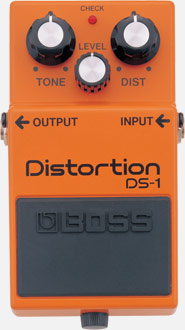
The Boss DS-1 is one of the best-selling guitar pedals in history. It's been on pedalboards since 1978. Kurt Cobain used one. Steve Vai used one. Joe Satriani used one. At around $50 new, it's the first distortion pedal most players ever buy, and it's also one that plenty of serious players still use for their whole careers.
So does it still hold up in 2026, with hundreds of distortion pedals at the same price point now? After three weeks of testing through a Fender Deluxe Reverb, a Marshall JCM800, and a solid-state practice amp, here's the honest answer.
Background and History
The DS-1 was designed by Boss engineer Mitsuru Tamura and released in 1978 as one of the first "distortion" pedals ever made. Before it, guitarists got distortion by pushing an amp into natural breakup or using fuzz pedals. The DS-1 was a deliberate shot at high-gain distortion at any volume, which was a pretty radical idea at the time.
The circuit has remained largely unchanged over its 48-year production run. The current version uses the same basic topology as the original, though the specific components (op-amps, clipping diodes) have varied across different production runs. The orange enclosure is unchanged and immediately recognizable.
One thing to know: the DS-1 is a buffered bypass pedal. The buffer is good quality and adds basically no noise on normal-length cable runs, but it matters if you're running a board with multiple buffers already.
How It Actually Sounds
The DS-1 gives you exactly what most people picture when they think "distortion pedal." It's a hard-clipping circuit with a wide gain range, scooped mids, and a bright, aggressive top end. At lower gain (7 to 10 o'clock) you get a decent crunch. At medium settings (noon) it covers classic rock territory. Crank it up and it gets into heavy rock and metal range, though at max gain it turns fizzy and loses note definition.
The tone knob is aggressive. Rolling it counter-clockwise produces a dark, muddy sound (not useful on most rigs). Rolling it clockwise produces a bright, cutting edge that works for lead work but can become harsh. The sweet spot for most players is between 10 and 2 o'clock on the tone knob, adjusted to taste for the amp you're using.
With single-coils: The DS-1 sounds better with single-coils than most people expect. The scooped low-mids actually work in your favor here, adding gain without thickening up the sound uncomfortably. Bridge pickup on a Strat through a clean Fender is genuinely good for classic rock.
With humbuckers: The low end gets heavy and loses definition at higher gain. Setting the tone knob higher and keeping gain under 2 o'clock helps. Through a Marshall JCM800 with gain at 9 o'clock, the DS-1 gives you a tight, usable crunch rhythm tone.
With a practice amp: This is where the DS-1 struggles. At low volume through a solid-state amp, the fizzy top end becomes more prominent and the mid-scoop sounds hollow. It's a pedal designed to work with a tube amp's natural compression. Manage expectations if that's your primary setup.
Pros and Cons
Pros
- Excellent value at ~$50
- Wide gain range covers crunch to heavy rock
- Proven circuit used by professionals for 48 years
- Indestructible build quality
- Widely available new and used
- Takes modifications well (Keeley, Monte Allums mods)
Cons
- Fizzy at maximum gain settings
- Scooped mids can disappear in a full-band mix
- Tone knob range is unsubtle, extreme in both directions
- Buffered bypass
- Sounds mediocre through solid-state amps
DS-1 vs The Alternatives
DS-1 vs Boss DS-2 Turbo Distortion: The DS-2 adds two Turbo modes that change up the clipping circuit. Turbo I is tighter with more mids, Turbo II is looser and more aggressive. For most players the DS-2 is a worthwhile upgrade at $20 more, but the DS-1 has more character in its "flaws."
DS-1 vs MXR Distortion+: The Distortion+ is warmer and less fizzy at high gain, but has a narrower gain range and a less aggressive character. For classic rock and blues-based distortion, it often sounds better. For heavier styles, the DS-1 has more range.
DS-1 vs ProCo RAT2: The RAT2 is generally the better distortion pedal, with a more usable high-gain tone, a smoother top end, and the famous Filter knob sweeping from bright to dark. At $80 vs $50, the RAT2 costs more but delivers more too. If budget isn't a constraint, get the RAT2. But the DS-1 holds its own in this comparison, no shame here.
DS-1 modified (Keeley Ultra): The Keeley Ultra mod upgrades the capacitors, op-amp, and clipping diodes. You get a smoother top end, better clarity at high gain, and a more useful tone range. At around $80 to $100 for a pre-modified used unit, it transforms the pedal. Worth a look if you like the DS-1's character but want it cleaned up.
Boss DS-1 Score: 8.2 / 10
The Boss DS-1 remains one of the best values in guitar effects. It's not perfect. The fizzy top end at high gain and the scooped mids in a live mix are real limitations, but at $50, no pedal gives you more usable tonal range. It's been on professional boards for almost 50 years for a reason. Buy one, learn its quirks, and decide later whether a mod or an upgrade is worth it. There's a good chance you'll just keep it as is.