Best Fuzz Pedals 2026: Ranked After Extensive Testing
Fuzz is the original guitar effect, and it's still one of the most polarizing. Done right, fuzz gives you a raw, harmonically rich saturation that overdrive and distortion just can't touch. Done wrong, it sounds like a dying battery and a blown speaker. The difference usually comes down to the circuit type, the transistor, and (more than with any other pedal) your amp.
For this roundup, every pedal got tested with a 1964 reissue Fender Strat (single-coils), a Les Paul Standard (humbuckers), a Fender Blues Deluxe, and a Vox AC30. Fuzz pedals are famously picky about amp and pickups, and that shows up in every review below.
Silicon vs Germanium: What's the Actual Difference
The silicon vs germanium debate is the first thing you run into when shopping for fuzz, and it actually matters. Germanium transistors, the kind used in vintage Fuzz Face circuits, give you a warmer, rounder fuzz with a distinctive "sag" as the battery drains. They're temperature sensitive too. They can sound different on a cold stage than a hot one, which adds character but also unpredictability.
Silicon transistors, used in the Big Muff and most modern fuzzes, are tighter, more aggressive, and a lot more consistent. Silicon fuzz tends to have more sustain and a harder edge. Neither one is better. They just suit different styles, different players, and different amps.
The Top 5 Fuzz Pedals
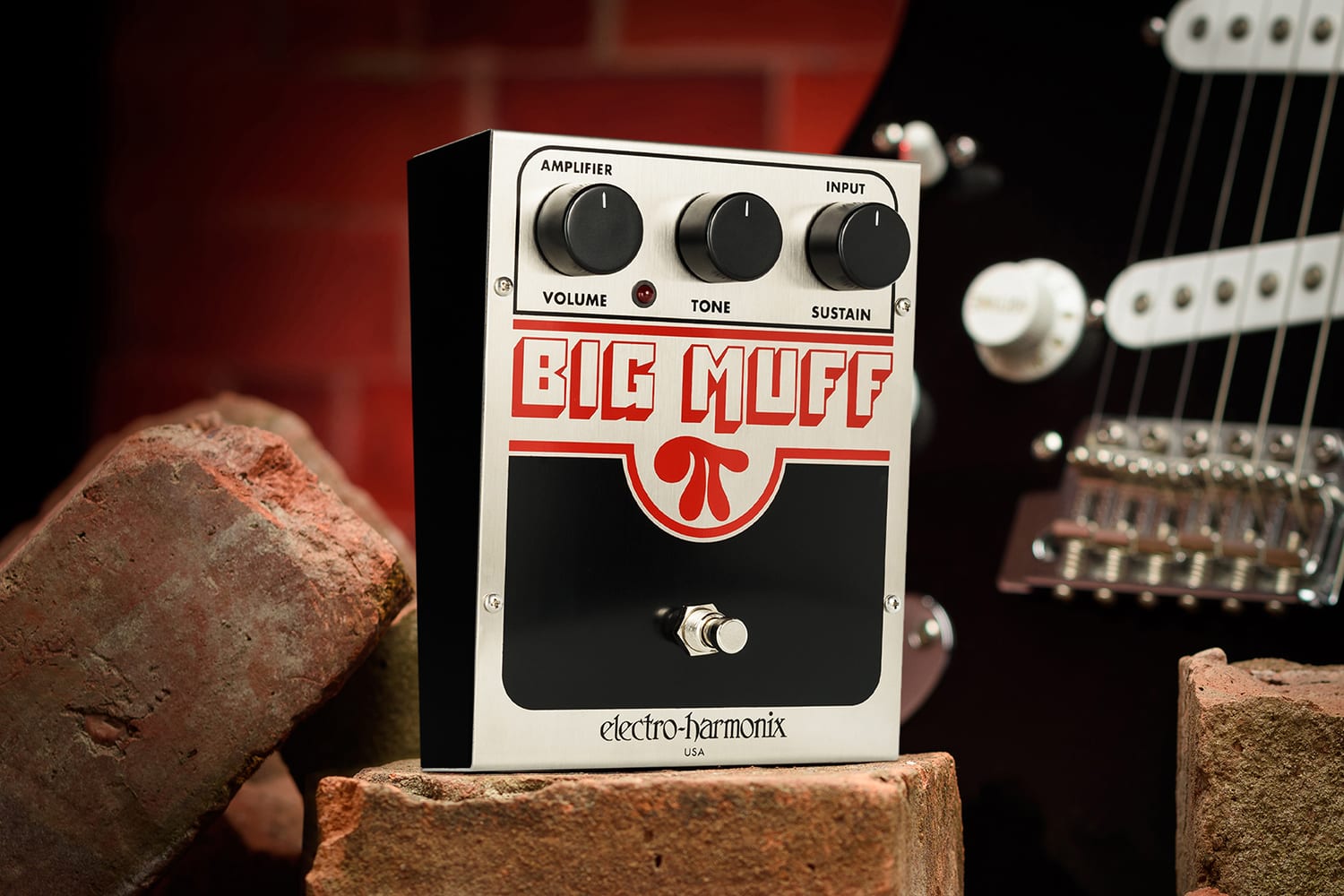
The Big Muff has been on pedalboards since 1969 and it earns its place every single time. The silicon transistor circuit gives you a huge, singing fuzz with more sustain than almost anything else out there. The three knob layout (Volume, Tone, Sustain) looks simple but isn't. The Tone knob sweeps from dark and woolly all the way to bright and cutting, covering a ton of ground.
The Big Muff works best with single-coils into a clean amp that has decent headroom. With humbuckers the low end can get thick and undefined when you crank the sustain, so rolling off some tone at the guitar helps. It's also one of the few fuzz pedals that still sounds good at higher gain without turning into a fizzy mess.
Pros
- Massive, sustained fuzz tone
- Wide tonal range from the tone knob
- Works across genres: psych, grunge, blues, rock
- Affordable and durable
Cons
- Can get muddy with humbuckers
- Drops volume in the mid-frequency "fuzz scoop"
- Not great for chord work at high gain
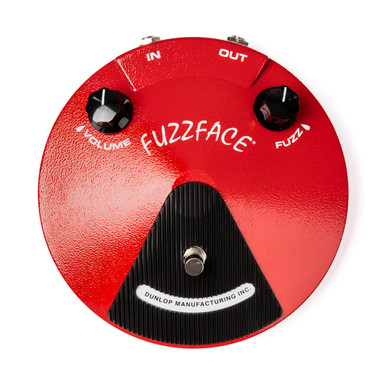
The Fuzz Face is the other great fuzz lineage, and the germanium Mini captures the vintage Dallas-Arbiter sound in a smaller, board-friendly package. The way it reacts to your guitar's volume knob is unlike anything else. Roll back the volume and it cleans up completely, giving you a whole range of tones from one knob. That's a feature, not a side effect.
It needs a low-impedance source, so it has to go first in your chain, and it loses its magic if you put a buffer in front of it. It also sounds different at different temperatures. None of that is a flaw exactly, it's just how germanium fuzz works, and learning to live with it is part of owning one.
Pros
- Exceptional guitar-volume cleanup
- Warm, organic germanium character
- Compact mini enclosure
- True bypass
Cons
- Must be first in chain
- Temperature sensitive
- Less sustain than silicon fuzz
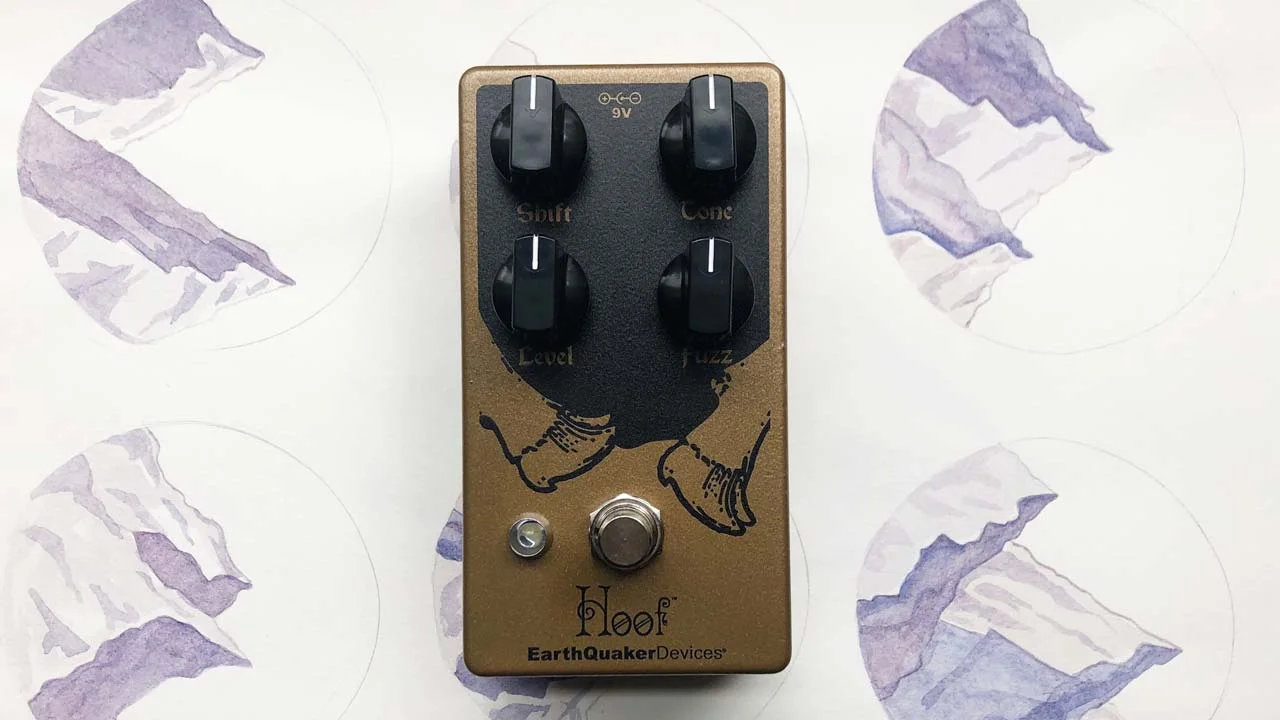
The Hoof is what happens when you take the Big Muff circuit and finally give it a real mid control. The Shift knob moves the mids from scooped, classic Big Muff territory, to mid-forward, which fixes the "disappears in a live mix" problem that Big Muffs are notorious for in a band setting. This is a working musician's fuzz.
It's also tighter and better defined than the Big Muff at equivalent settings. The attack is a touch faster and note definition holds up better at high gain. It costs more than a Big Muff, but it's a noticeably more versatile tool.
Pros
- Mid control solves band-mix problems
- Tighter and more defined than Big Muff
- Exceptional build quality
- Made in the USA
Cons
- More expensive than Big Muff
- Less "vintage" character than original circuits
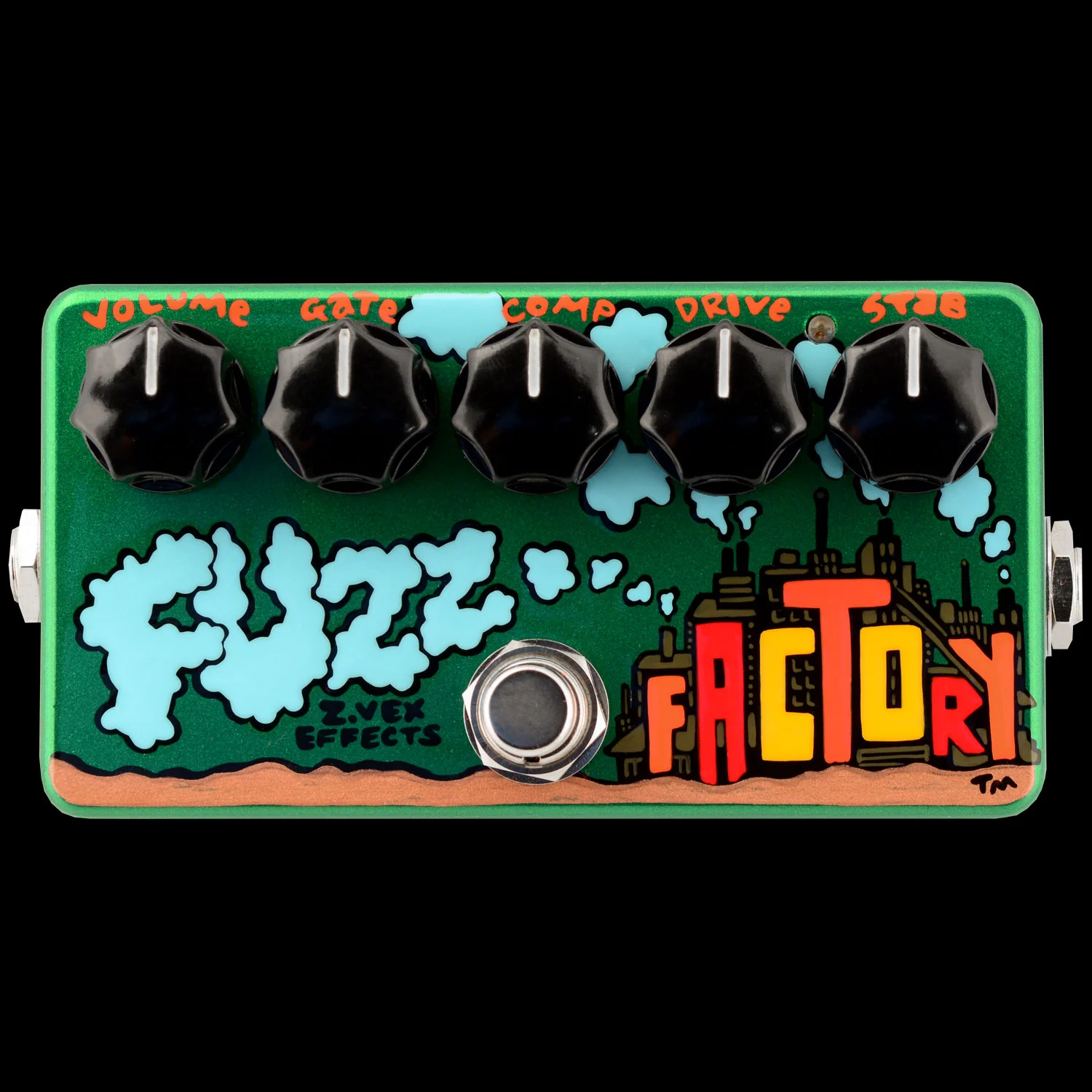
The Fuzz Factory isn't a conventional fuzz pedal and it's not trying to be. Five knobs control transistor bias, gate, compression, and oscillation, and most combinations produce sounds you've never heard come out of a guitar pedal before. At "normal" settings you get a vintage silicon fuzz. Push it into weirder territory and it oscillates, self-generates, gates hard, and squeals in genuinely interesting ways.
This is a specialist pedal for players who want to mess around. It's not a workhorse tone tool, but for textures, recording, and experimental music it's genuinely inspiring.
Pros
- Enormous tonal range
- Unique oscillation and gating sounds
- Hand-built in the USA
Cons
- Steep learning curve
- Unpredictable, not reliable for live use at extreme settings
- Expensive
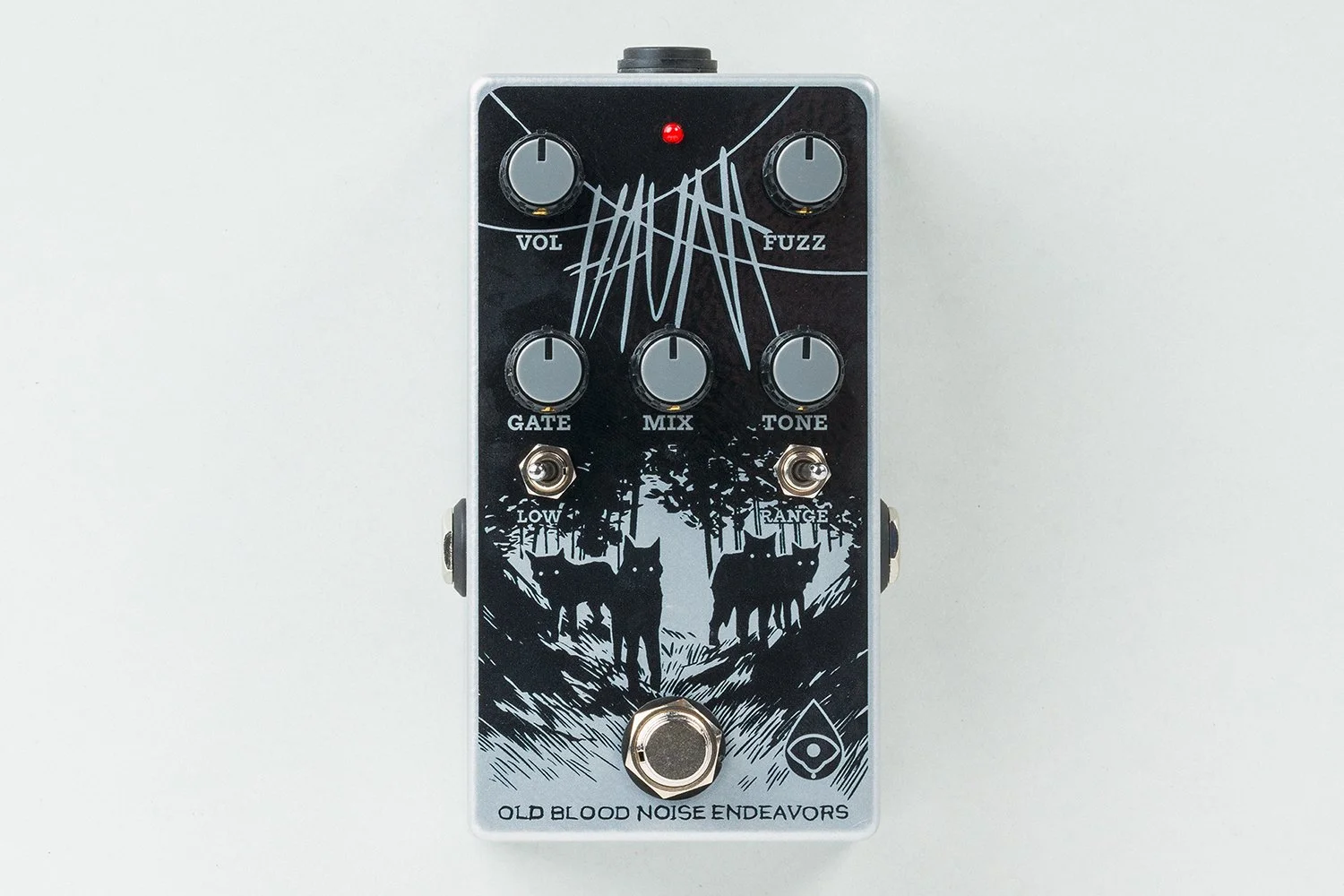
The Haunt is an underappreciated silicon fuzz with a cleaner low end than the Big Muff and a bit more bite up top. The Shift control, similar in concept to the EQD Hoof's mid control, moves the character from dark and thick to bright and cutting. At $99 it punches way above its price.
It's especially good with humbuckers, where the tighter low end keeps things from turning to mud the way a Big Muff sometimes can. A solid buy if you want boutique fuzz tone without the boutique price tag.
Pros
- Excellent with humbuckers
- Tighter low end than Big Muff
- Great value
- True bypass
Cons
- Less sustain than Big Muff
- Brand is less well-known, harder to find used
Which Fuzz Pedal Should You Buy?
For most players, start with the Electro-Harmonix Big Muff Pi. It's the most versatile fuzz at any price, it's affordable, and it basically defines the category. If you want vintage Hendrix-style sounds and like the interactive feel of germanium, get the Dunlop Fuzz Face Mini. If you're gigging with a band, the Earthquaker Hoof's mid control makes it way more practical than a standard Big Muff. And if you want to go deep into experimental territory, the Zvex Fuzz Factory is in a category of its own.
Frequently Asked Questions
What's the difference between silicon and germanium fuzz?
Germanium fuzz, like the Dunlop Fuzz Face Mini, is warmer and more touch-sensitive, and it cleans up nicely when you roll back your guitar's volume, but it's temperature-sensitive and can sound different from gig to gig. Silicon fuzz, like the Big Muff Pi, is more consistent, more aggressive, and less affected by temperature.
Will fuzz work with my amp's gain channel?
Usually not well. Fuzz pedals are designed to hit a clean amp input directly. Stacking fuzz into an already-dirty amp channel often turns into an unpleasant, farty mess. Run fuzz into your amp's clean channel for the best results.
Why does my fuzz pedal sound bad with humbuckers?
Some fuzz circuits, especially vintage-style Fuzz Face designs, were voiced around single-coil pickups and can get muddy or gated with hot humbuckers. The Earthquaker Hoof and Big Muff Pi handle humbuckers more gracefully than a classic Fuzz Face.
How do I pick a fuzz that matches my genre?
Fuzz is one of the most genre-specific pedals you can buy, from Hendrix-style germanium to modern doom and shoegaze walls of noise. Our Tone Finder takes your genre and influences into account and recommends the fuzz style that actually fits.