Best Mini Pedals 2026: Big Tone in a Compact Package
Mini pedals have changed pedalboard design. Where a 30×12-inch board once held eight full-size pedals, it now holds twelve or fifteen mini pedals — and often sounds just as good or better. The miniaturization of guitar pedal circuits has reached the point where some of the finest-sounding pedals ever made come in housings half the size of a standard Boss enclosure.
We tested five mini pedals across different genres and pedalboard configurations, evaluating whether they justify the format. Spoiler: the best ones absolutely do. The worst ones sacrifice tone for size. This guide helps you find the former.
Mini Pedal Tradeoffs: What You Gain and Lose
What you gain: Space is the obvious benefit — a mini pedal typically occupies 40-50% of the footprint of a standard pedal. On a Pedaltrain Nano or Metro board, this is the difference between fitting four pedals or seven. Mini formats also tend to be lighter, which benefits travelers and players who carry compact rigs.
What you sometimes lose: Control accessibility. Mini pedals often have closely spaced knobs that can be fiddly to adjust, especially with thick fingers or in a live setting. Some mini pedals sacrifice features — fewer controls, no expression input, simpler circuit — to fit the format. The tradeoff is acceptable for pedals that do one thing well; it's more questionable for complex effects.
What you never lose in quality mini pedals: Tone. The best mini pedals use the exact same circuit as their full-size counterparts — the circuit is just physically rearranged to fit a smaller PCB. The Boss SD-1W Waza comes in a mini enclosure but uses the same Waza Craft electronics as the full-size version. There's no tonal compromise whatsoever. This is what separates quality mini pedals from budget filler.
What to Look for in a Mini Pedal
- Circuit integrity: Does the mini version use the same circuit as the full-size, or is it a simplified version? Quality mini pedals don't cut corners; budget ones often do.
- Control accessibility: Can you reasonably adjust the knobs on your pedalboard without needing to remove the pedal? Well-designed mini pedals space their controls for practical adjustment.
- Standard power supply compatibility: Does it run on standard 9V center-negative? Mini pedals that require unusual voltage or polarity complicate pedalboard power supply planning.
- True bypass or buffered bypass: Same considerations as full-size pedals. Know what you're getting and whether it works for your signal chain.
- Build quality: Metal enclosure is essential. Mini plastic pedals get damaged. The housing needs to withstand being stepped on thousands of times alongside tightly packed neighbors.
- Side vs top-mounted jacks: Side-mounted jacks (like Boss) allow tight stacking on a pedalboard. Bottom-mounted jacks require clearance around the pedal and are harder to route cables for. Check which your board configuration prefers.
The Rankings
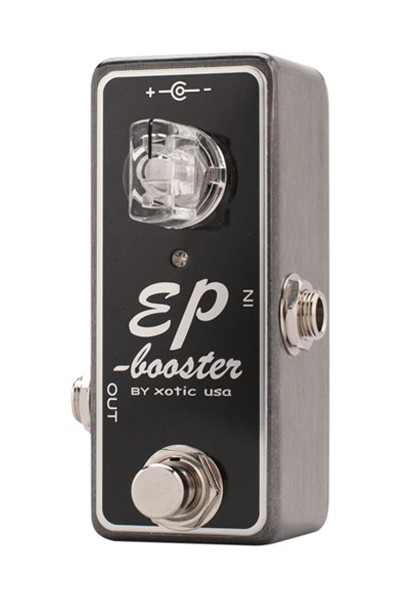
The Xotic EP Booster is among the most influential mini pedals ever made. Based on the preamp circuit of the classic Maestro Echoplex tape echo unit (the EP-3), the EP Booster adds a harmonic richness and presence that makes your entire signal chain sound more alive. Jimmy Page, Brian May, and countless others used the Echoplex preamp stage purely for the tonal enhancement — even with the echo effect turned off. The EP Booster bottles that preamp magic in a tiny enclosure.
The single Volume knob keeps it simple. Internal trim pots allow you to adjust bass and treble response for different guitars and rigs. The boost character adds depth and harmonic complexity rather than just raw volume — which is why many players leave it always on as a "secret weapon" for better tone. At around $89, the EP Booster is more expensive than typical mini boosters, but what it does is genuinely unique. Every serious pedalboard benefits from this pedal, regardless of what else is on it.
Pros
- Legendary Echoplex preamp character
- Adds harmonic richness, not just volume
- Internal trim pots for bass/treble adjustment
- Always-on enhancement for any rig
- Compact and pedalboard-friendly
Cons
- ~$89 — pricier than basic boosters
- Single knob limits real-time control
- Internal adjustments require opening the pedal
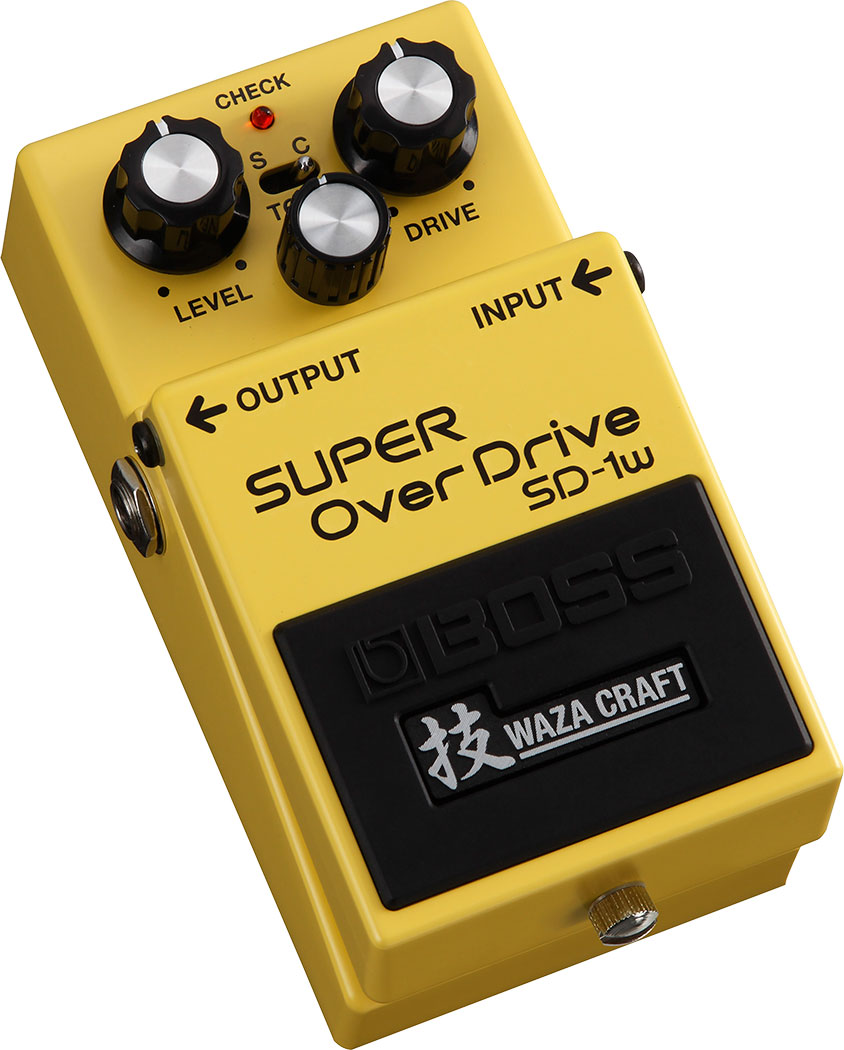
The Boss SD-1W Waza Craft packs the full SD-1 Super Overdrive circuit into a compact enclosure with one critical upgrade: Waza Craft component selection. Hand-chosen capacitors and resistors that meet tighter tolerances than production spec parts result in a noticeably cleaner, more open overdrive character. The Standard mode delivers the classic SD-1 asymmetric clipping that has appeared on countless recordings. The Custom mode opens up the frequency response for a more present, modern character.
The SD-1 is one of the all-time great overdrive pedals — simple three-knob layout (Drive, Tone, Level), warm asymmetric clipping that responds beautifully to picking dynamics, and an inherent mid-focus that cuts through any mix. In Waza Craft form, those qualities are enhanced. At around $99, the SD-1W costs more than the standard SD-1 but the Waza Craft quality is audible and appreciable. For players who love classic Boss overdrive and want to save space, this is the definitive choice.
Pros
- Legendary SD-1 circuit in compact form
- Waza Craft hand-selected components
- Standard and Custom mode switch
- Excellent dynamic response to picking
- Classic mid-focused overdrive character
Cons
- ~$99 — premium over standard SD-1
- No true bypass (buffered)
- Compact controls require care to adjust live
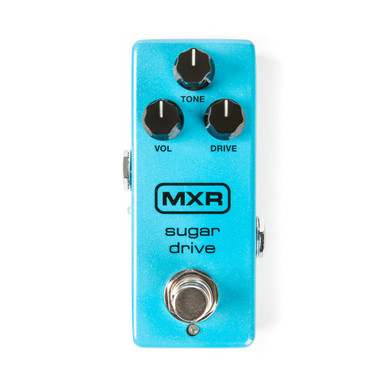
The MXR Sugar Drive M294 is the most refined Klon-inspired overdrive in a mini format. The Klon Centaur — an overdrive pedal that originally sold for $329 and now commands $2,000+ on the used market — has inspired more clones than virtually any other pedal in history. The Sugar Drive captures that signature transparent, harmonically rich overdrive character in MXR's compact mini format, at a reasonable price.
The Klon-style circuit works by blending a clean signal with overdriven signal, which preserves the fundamental tone and character of your guitar and amp while adding just enough harmonic complexity. The result sounds like "your tone, but better" rather than an overdrive imposed on top. Three controls (Volume, Tone, Drive) give practical range. True bypass keeps the signal path clean. At around $69, the Sugar Drive is arguably the best value transparent overdrive in any format, mini or otherwise. It's the pedal that makes everything else on your board sound better.
Pros
- Klon-inspired transparent overdrive circuit
- Preserves guitar and amp character
- True bypass
- Excellent value at ~$69
- MXR's proven compact build quality
Cons
- Doesn't sound identical to a real Klon (nothing does)
- Three controls in mini format require precision
- Low-gain specialty — not for high-gain styles

Brian Wampler has built a reputation as one of the most respected boutique pedal designers, and the Tumnus shows why. Another Klon-inspired transparent overdrive, but Wampler's implementation has its own distinct voice — slightly warmer and more musical in the low-mids than the Sugar Drive, with a more refined top-end that suits complex chord work and single-note lines equally well.
Three controls (Gain, Treble, Volume) give you the essential adjustment range. True bypass. The build quality is excellent — the enclosure feels more substantial than many mini pedals in this size. At around $99, the Tumnus costs more than the MXR Sugar Drive for what is ostensibly a similar circuit, but Wampler's voicing is distinct and many players feel the extra refinement justifies the price. If you've compared multiple Klon-style pedals and want the most musical interpretation in a small format, the Tumnus is the choice. If you haven't, start with the MXR and upgrade if the tone quest calls for it.
Pros
- Refined Wampler interpretation of the Klon circuit
- Warm, musical low-mid character
- True bypass
- Premium boutique build quality
- Works beautifully for chords and single notes
Cons
- ~$99 — premium vs. similar-category options
- Limited gain range (transparent low-gain only)
- Knobs close together in mini format
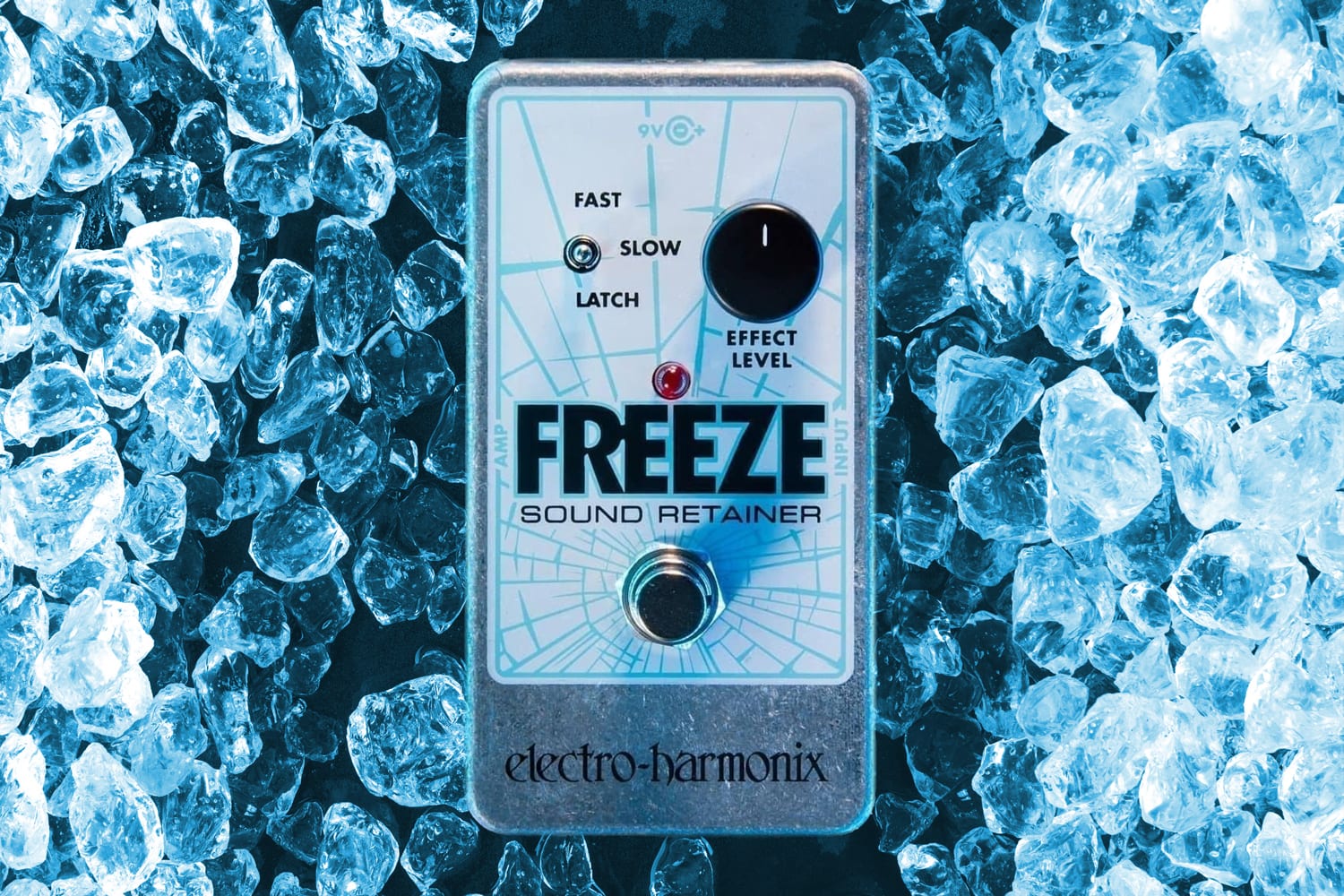
The EHX Freeze is a unique pedal that occupies its own category: it captures the current note or chord you're playing and sustains it indefinitely while your signal continues through normally. Press the footswitch while playing an E major chord, and the Freeze holds that chord as an infinite, drone-like backdrop while you play melody notes over it. It transforms your guitar into a one-person ambient drone machine.
Three modes — Fast (instant freeze), Slow (gradual fade-in freeze), and Latch (tap to freeze, tap to release) — give different creative applications. The effect is completely musical and genuinely unlike anything else in pedalboard form. At around $79, it's affordable for something this distinctive. The Freeze has become a staple of ambient, post-rock, and experimental players who want textural depth without loops or keyboards. If you play with reverb and delay on your board and want to push into deeper sonic territory, the Freeze is a natural next step that will change how you think about composing on the spot.
Pros
- Unique infinite sustain/drone capability
- Three modes for different creative uses
- Completely musical and expressive
- Affordable at ~$79
- Compact footprint for its creativity range
Cons
- Very specialized — single-purpose effect
- Not useful for every style
- Requires some creativity to integrate into a live set
Which Mini Pedals Should You Buy?
The Xotic EP Booster is the mini pedal that every board benefits from — buy it first and build around it. For overdrive, the Boss SD-1W Waza is the best classic-style mini drive, while the MXR Sugar Drive M294 and Wampler Tumnus are the Klon-style choices (Sugar Drive for value, Tumnus for refinement). The EHX Freeze rounds out the list as the most creative and unique mini pedal available — a genuine tool for ambient exploration that no other pedal replicates.
Frequently Asked Questions
Do mini pedals sacrifice tone for size?
No, not with the pedals on this list. Mini versions typically use the same circuit as their full-size counterparts, just in a smaller enclosure with fewer or relocated controls. You lose some knob real estate, not tone.
What should I keep full-size instead of going mini?
Pedals you adjust often mid-set, like a wah or an expression-heavy multi-effects unit, are worth keeping full-size for easier foot control. Set-and-forget pedals like boosts, drives, and utility pedals are the best candidates for going mini.
Will mini pedals fit my existing power supply?
Almost always, since most mini pedals use the same standard 9V center-negative barrel connector as full-size pedals. Just check the current draw in mA on the pedal against what your power supply's output can handle.
How many mini pedals fit on my board?
That depends on your board size and how you lay everything out, which is easier to see than guess. Our Pedalboard Builder lets you drag pedals onto a virtual board so you can plan your mini pedal layout before you buy anything.