Best Looper Pedals 2026: Ranked for Practice and Live Use
A looper pedal is one of the most useful practice tools a guitarist can own, and it's also become a real part of a lot of live setups. Options run anywhere from $40 single-track loopers to $600 multi-track performance loopers with MIDI sync and drum machines built in. Knowing which features you actually need, and which you'll never touch, is the key to not wasting money here.
We tested five loopers extensively: the Boss RC-5, TC Electronic Ditto X2, Electro-Harmonix 720 Stereo Looper, Boss RC-500, and the Singular Sound AEROS Loop Studio. Here's what each one is actually good for.
What to Look for in a Looper
Before we get into specific pedals, figure out your use case first. A looper for home practice is a completely different animal than a looper for live performance, and the right choice depends almost entirely on context:
- Practice loopers need simple operation, decent loop time, and a footswitch that feels reliable. That's it. Over-specced loopers just waste board space and money at home.
- Live performance loopers need multiple tracks, MIDI sync if you're using backing tracks, easy undo and redo, and a footswitch layout you can use without looking down mid-song.
- Studio loopers need stereo I/O, USB audio, and ideally the ability to export loops as actual audio files.
The Rankings

The RC-5 is the best single-footswitch looper you can buy. It gives you 13 hours of recording time, 99 memory slots, built-in rhythm tracks with 16 drum patterns, stereo I/O, and USB audio, all packed into a compact single-footswitch box. For practice and simple live use, it handles pretty much everything you'll need.
Sound quality is excellent. It records at 32-bit/44.1kHz with no audible degradation even after multiple overdubs. The rhythm section is simple but it does the job for keeping time while you practice. The memory slots let you save loops to come back to later, which is genuinely useful day to day.
Pros
- Excellent sound quality
- 99 memory slots
- 13 hours recording time
- Built-in rhythm tracks
- USB audio for computer recording
- Compact single-footswitch design
Cons
- Single footswitch limits live performance flexibility
- Rhythm tracks are basic
- No multi-track capability
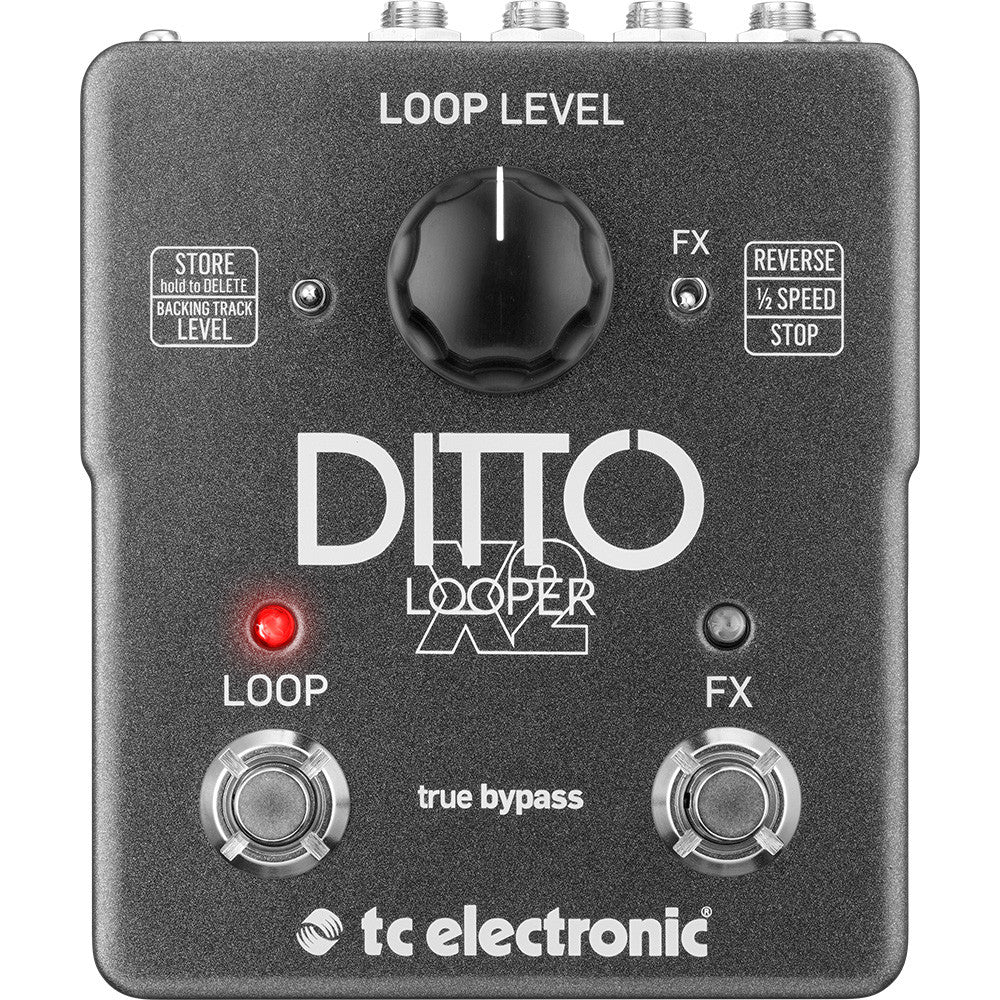
The Ditto X2 is for players who want a simple, reliable tool with two footswitches: one for record/overdub/play and one for stop/clear. No memory slots, no drum tracks, no USB, just a high-quality looper that does exactly what a looper should do and nothing more. The second footswitch adds undo/redo, which makes it a lot more practical for live use than the single-footswitch original Ditto.
Sound quality is TC Electronic's "true tone" 24-bit processing, and it sounds clean and transparent. If feature-rich loopers overwhelm you, or you just want the smallest possible footprint, the Ditto X2 is the answer.
Pros
- Extremely simple to use
- Two-footswitch design is practical live
- Excellent sound quality
- Compact and lightweight
- True bypass
Cons
- No memory slots, loops are lost at power off
- No drum tracks
- No USB
- 5-minute loop time limit
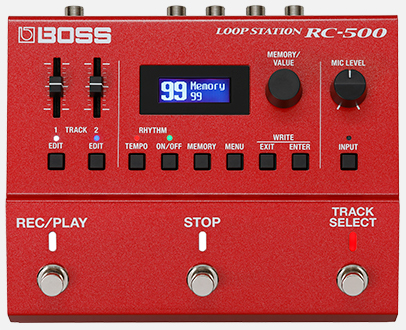
The RC-500 is the RC-5's bigger sibling, adding a second simultaneous track, MIDI sync in and out, and a more sophisticated rhythm section with 280 drum/bass patterns. For live looping, where you're building arrangements out of multiple loop layers, that two-track capability is a real, practical advantage over single-track loopers.
MIDI sync is the feature that matters most if you use backing tracks or drum machines. Syncing the RC-500 to a MIDI clock keeps loops locked in with the rest of your live setup, which matters a lot once you're doing this professionally. At $300 it's an investment, but for serious live loopers it earns every dollar.
Pros
- Two simultaneous tracks
- Full MIDI in/out with clock sync
- 280 rhythm patterns
- 99 memory slots
- USB audio interface built in
Cons
- Expensive at around $300
- Complex, steep learning curve
- Larger footprint
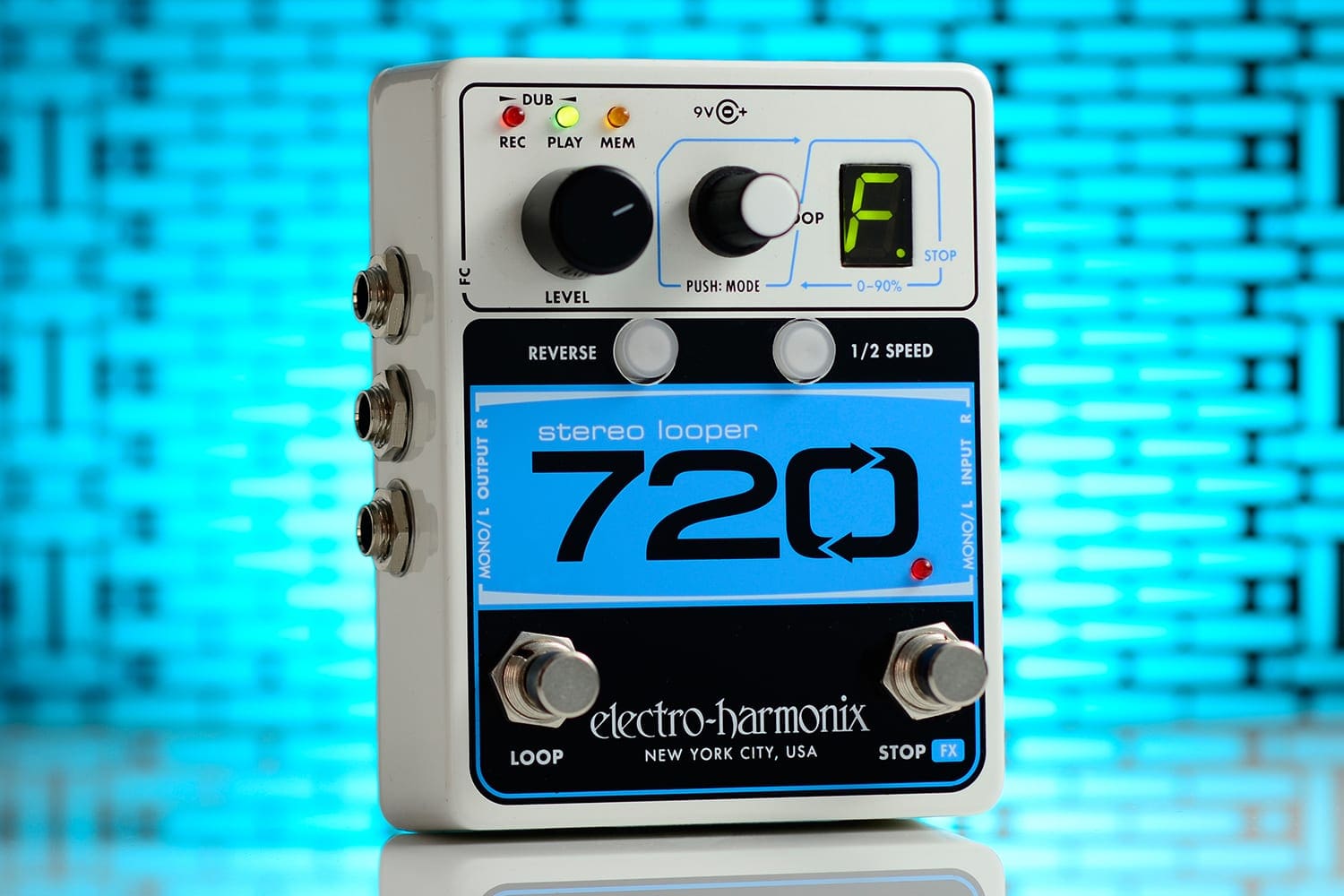
The EHX 720 gives you true stereo looping with 12 loop slots, 720 seconds of recording time, and a USB port for pulling loops onto a computer as WAV files. That stereo capability is genuinely useful if you run a stereo rig, and capturing a stereo loop then exporting it as a WAV after a session is something no other pedal in this price range can do.
The footswitch layout is less intuitive than the Boss loopers, and there's a slight learning curve to the operation. But for recording guitarists and players with stereo setups, the 720's combination of features is compelling.
Pros
- True stereo looping
- Export loops as WAV files via USB
- 12 memory slots
- 720 seconds recording time
Cons
- Less intuitive interface than Boss loopers
- Single footswitch for all functions requires button combinations
Which Looper Should You Buy?
For most players, the Boss RC-5 at around $150 is the answer. It covers practice, simple live use, and studio recording with excellent sound quality and 99 memory slots. If you want something simpler and smaller, the TC Electronic Ditto X2 does the job without any confusion. For serious live performance with MIDI, the Boss RC-500 is the professional-grade pick. Buy for your actual use case, not for feature count. The best looper is the one you'll actually use every time you play.
Frequently Asked Questions
Do I need a looper if I don't perform live looping music?
A looper is still useful for practice even if you never use it on stage. Looping a chord progression to solo over, or recording a riff idea on the fly, are both things any guitarist benefits from, not just dedicated loop artists.
How much loop time do I actually need?
For practice, a few minutes is plenty since you're usually looping short phrases. For live performance building layered arrangements, look at loopers like the Boss RC-500 with more headroom and multiple tracks so you don't run out of space mid-song.
What's the difference between a single-track and multi-track looper?
A single-track looper like the Boss RC-5 or TC Ditto X2 records one layer at a time, which is simpler and fine for most practice and casual live use. A multi-track looper like the RC-500 lets you build and control separate layers independently, which matters for complex live arrangements.
Is a looper the missing piece in my current setup?
Loopers, tuners, and noise gates are the pedals players skip most often and regret later. Check your current board against ours in the Pedal Blindspot tool to see exactly what role, if any, you're missing.