Best Pedalboard Power Supply 2026: Stop the Hum for Good
A bad power supply is the most common source of noise on a pedalboard, and it's also one of the most overlooked purchases. (The other common culprit is low-quality patch cables — see our guitar cables for pedalboard guide if you're chasing hum from that direction.) Most players spend hundreds on pedals and then power them with a $20 daisy chain off a power brick, then spend hours chasing hum they think is coming from the pedals themselves. A quality isolated power supply fixes this for good.
This guide covers the most important concepts (isolated outputs, milliamp requirements, voltage options) and ranks the best power supplies for boards of different sizes.
Isolated vs Daisy Chain: Why It Matters
A daisy chain power supply runs all your pedals off one electrical output, sharing the ground connection across every pedal on the chain. That's fine for small boards with quiet pedals, but in practice it creates ground loops that show up as hum, buzz, or high-frequency interference. Digital pedals are especially bad in daisy chain setups since they generate switching noise that bleeds into any analog pedal sharing that power source.
An isolated power supply gives each pedal its own separate electrical circuit with its own ground reference. That kills ground loops completely. Pedals that hummed nonstop in a daisy chain setup go dead silent. The difference isn't subtle. It's the difference between sounding professional and sounding like you're playing through a busted cable.
Understanding Milliamps and Voltage
Every pedal has a current draw spec'd in milliamps (mA). Your power supply needs to provide at least that much per output. More is fine, less will make the pedal glitch out or not power on at all. Digital pedals (loopers, reverbs, delays, multi-effects) usually draw 100 to 500mA. Analog pedals draw 20 to 100mA. Check your pedals' specs and add up the total before you buy anything.
Most pedals run on 9V DC negative tip. Some run on 12V or 18V, like older Boss pedals, Voodoo Lab pedals, and a handful of boutique units. A good power supply gives you outputs at multiple voltages, or lets you adjust voltage per output.
Top Pedalboard Power Supplies Ranked
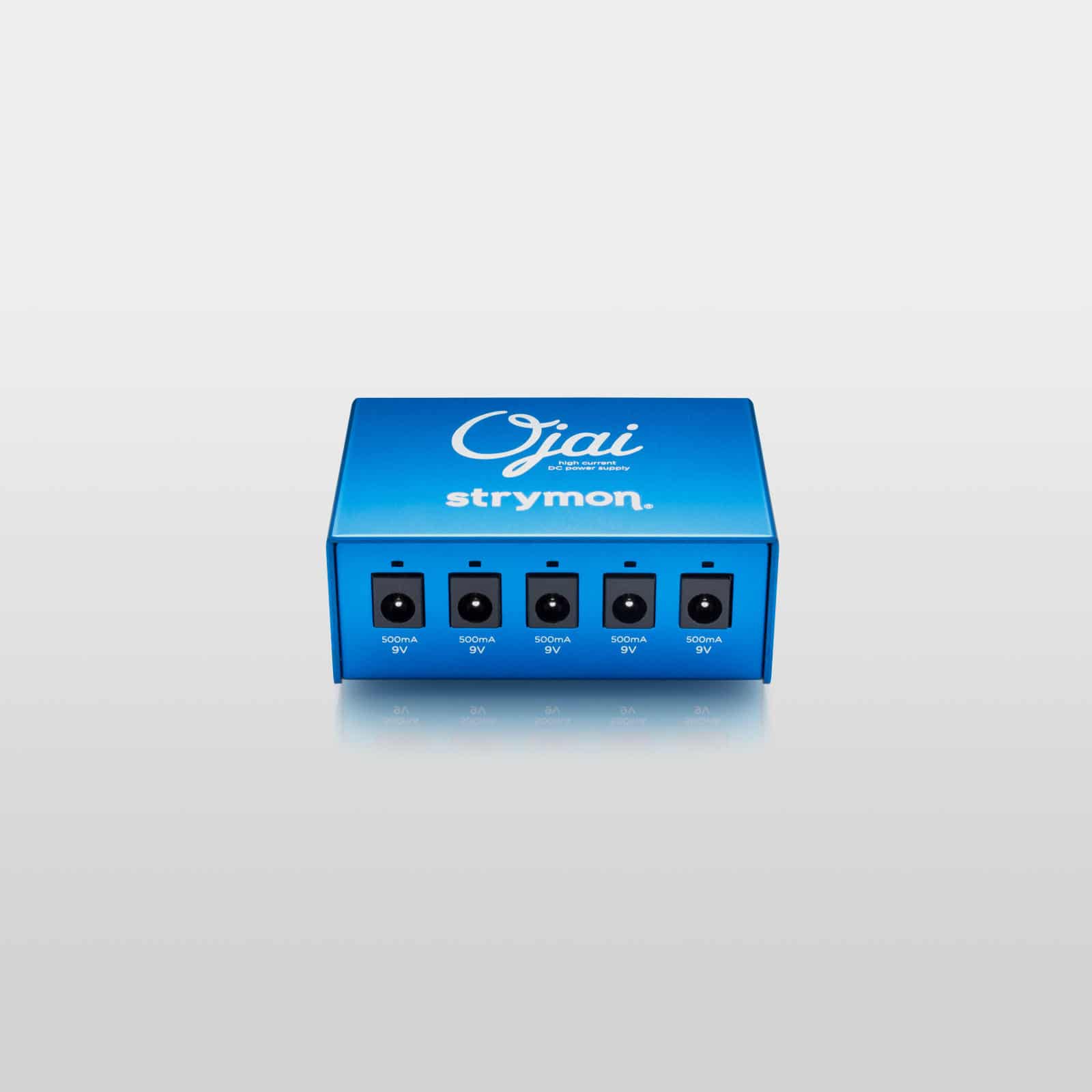
The Strymon Ojai R30 is the best compact pedalboard power supply you can buy. Five fully isolated 9V outputs at 500mA each handle most digital pedals without breaking a sweat, and the noise floor (under 10μV) is genuinely exceptional. In testing with 12 pedals, including three digital units, the noise floor was basically inaudible. The compact enclosure mounts easily under a pedalboard with the included hardware.
You can expand the R30 with more Ojai units using a Strymon Zuma as a hub, so it scales up fine for bigger boards too. At $165 it's an investment, but it pays for itself the first time you play a gig without any hum.
Pros
- Exceptionally low noise floor
- 5 isolated outputs at 500mA each
- Compact, undersized enclosure
- Expandable with Zuma
- Premium build quality
Cons
- Expensive at around $165
- Only 9V outputs, no variable voltage
- 5 outputs may not be enough for large boards
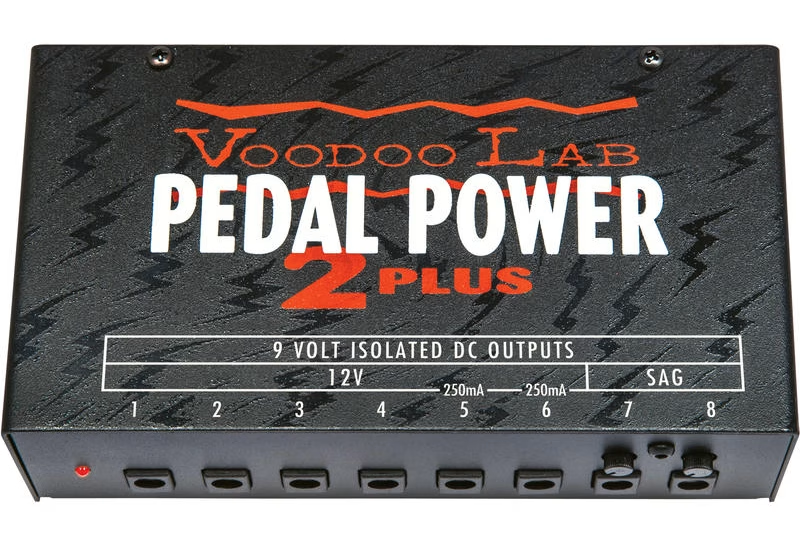
The Pedal Power 2 Plus has been the professional standard for isolated pedalboard power since 2001, and it's still an excellent choice. Eight isolated outputs cover 9V, 12V, and 18V pedals, with two "high current" outputs for digital pedals drawing up to 250mA. The "sag" output simulates a dying battery for vintage fuzz pedals that actually sound better with reduced voltage.
The included cables and adaptors handle just about every connector type out there. It's bulkier than the Ojai and needs an external wall-wart, but the voltage flexibility makes it the best pick for boards with mixed voltage needs.
Pros
- 8 isolated outputs
- 9V, 12V, and 18V options
- Battery sag output for vintage fuzzes
- Industry-proven reliability
Cons
- Bulky, requires an external power brick
- Older design
- 250mA limit on high-current outputs (some modern pedals need more)

The Truetone CS12 gives you 12 isolated outputs with individually configurable voltage (9V, 12V, or 18V per output), making it the most flexible power supply out there for large boards with all kinds of voltage needs. Every output handles up to 250mA, and the CS12 ships with every adaptor you'll need. For boards with 8 or more pedals running mixed voltages, it's the most complete single-unit solution around.
Pros
- 12 fully isolated outputs
- Per-output voltage configuration
- Handles any board size and voltage requirement
Cons
- Expensive (around $250)
- Large physical footprint
- 250mA per output may be limiting for high-draw digital pedals
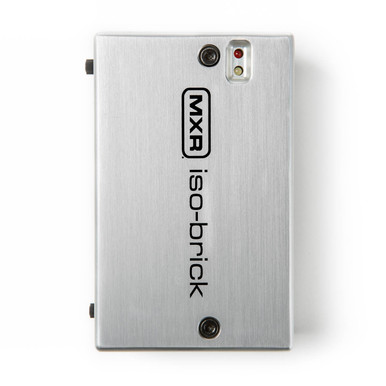
The ISO-Brick gives you 10 isolated outputs covering 9V, 12V, and 18V at a more accessible price than the CS12. Build quality is excellent, it's an MXR/Dunlop product and it shows. Two 9V outputs deliver 300mA for digital pedals, and two 18V outputs cover boutique pedals that need elevated voltage. A reliable, mid-priced option for boards in the 6 to 10 pedal range.
Pros
- 10 isolated outputs
- 9V, 12V, and 18V coverage
- Excellent build quality
- Better priced than CS12
Cons
- 300mA max per output
- Less flexible than Truetone CS12
Which Power Supply Should You Buy?
For most players with small-to-medium all-9V boards, the Strymon Ojai R30 is the best buy. The noise floor is exceptional, build quality is excellent, and it's compact enough to mount under any pedalboard. For boards with mixed voltage needs, the Voodoo Lab Pedal Power 2 Plus or MXR ISO-Brick give you the flexibility the Ojai doesn't. And for large, complicated boards, the Truetone CS12 is the most complete single-unit solution out there.
Frequently Asked Questions
Why shouldn't I just use a daisy chain?
Daisy chains connect all your pedals to one shared power circuit, which means noise from one pedal, especially digital pedals, can bleed into the others as hum or hiss. An isolated supply like the Strymon Ojai or MXR ISO-Brick gives each pedal its own clean, separate power output.
How many outputs do I need on a power supply?
Count your current pedals and add two or three for future additions. A 5-output supply like the Ojai R30 covers a small board, while larger boards with 8 or more pedals should look at something like the Truetone CS12 with 12 outputs.
Can one power supply handle 9V, 12V, and 18V pedals?
Some can. The Voodoo Lab Pedal Power 2 Plus and Truetone CS12 both offer selectable voltage outputs, which matters if you run boost pedals or certain overdrives that sound better on, or require, 18V. Check each pedal's spec sheet before assuming a standard 9V supply covers it.
How do I figure out my exact power needs before buying?
Your power needs come down to how many pedals you're running and their individual voltage and current draw. Lay your board out in our Pedalboard Builder first, and you'll have a clear list to check against any power supply's specs.